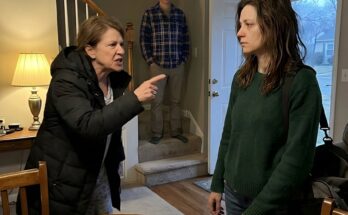
I began the process the next morning.
Not carelessly.
Not emotionally.
That was the part my family never understood about me. They mistook silence for weakness. They mistook patience for surrender.
But when I went quiet, it usually meant I had already made a decision.
I drove back to Sarasota on December 26, let myself into the condo, and stood in the living room for a long moment, staring through the glass doors at the marina.
Morning light stretched across the water in silver lines. A pelican landed on one of the dock posts below.
For a brief second, I allowed myself to feel the full weight of it.
Not just that they wanted the condo.
But that they were so certain I would let them take it.
Then I got to work.
I called my realtor first.
Her name was Denise Connelly. She was sharp, efficient, discreet, and exactly the kind of person you wanted on your side when timing mattered.
“I need this listed immediately,” I told her.
She laughed once. “Right after the holiday? You and everyone else.”
“I mean immediately. Furnished if necessary. Quick close. Serious buyers only.”
She heard something in my voice and stopped joking.
“How fast?”
“As fast as legally possible.”
By two that afternoon, she was at the condo with a photographer, a staging assistant, and a listing agreement.
We priced it aggressively enough to move quickly, but not so low that I would regret acting fast. Sarasota inventory was tight, and units near the water in my building rarely stayed on the market long.
Denise called it “a clean exit listing.”
I called it survival.
Meanwhile, my family was doing exactly what I expected.
Packing.
That evening, Jenna texted me.
Thinking of driving down this weekend to measure the kids’ room layouts! Hope that’s okay.
I looked at the message, smiled to myself, and replied:
Sure. Let me know.
That was enough to keep them comfortable.
Over the next four days, I heard updates through my cousin Megan. Megan was not especially loyal to anyone, but she loved gossip.
According to her, Jenna had already started announcing the move. She told people Dad was “helping transition the condo” and that I was “finally being generous instead of weird about money.”
Luke had apparently been bragging at a bar that he would be living near the marina by January and might even “flip the place later if Alyssa signs it over clean.”
That part almost made me call him just so I could laugh.
Instead, I signed disclosures, approved listing photos, and watched the condo go under contract seventy-two hours after it hit the market.
Cash buyer.
A retired orthopedic surgeon from Chicago.
No financing contingency.
Seven-day close.
Denise called me at 7:40 p.m., sounding almost impressed.
“You weren’t kidding,” she said.
“No.”
She paused. “Are you okay?”
I looked around the condo.
At the barstools I had chosen.
The bookshelves I had built.
The framed print above the console table.
All the careful details of a life my family treated like extra inventory.
Then I answered honestly.
“Not really. But I will be.”
The buyer wanted the unit mostly furnished, which made everything easier.
I packed only my personal belongings: clothes, documents, jewelry, my laptop, my late mother’s watch, and the ceramic bowl I kept by the door for keys.
Everything fit into my car and three shipping boxes.
Then I rented a small apartment on a six-month lease in Charleston, South Carolina, using a corporate housing program through my company.
New city.
Temporary address.
Mail forwarded to a P.O. box.
No social media updates.
No shared plans.
The day before closing, Jenna sent me photos of cardboard boxes stacked in her living room.
We’re almost ready! Kids are SO excited!
I replied with a thumbs-up emoji.
That was the harshest thing I did.
Not because she did not deserve consequences.
She did.
But because she still believed I was the same person they had always relied on.
The one who would protest until the very moment I gave in.
At 10:13 a.m. on January 4, I signed the closing documents.
At 11:02, the funds hit my account.
At 11:17, I turned off my old phone.
And sometime around noon, while Jenna and Luke were probably loading boxes into a rented truck and congratulating themselves on their new life, my condo legally became someone else’s home.
That was when the missed calls began.
When I turned my phone back on the next morning, there were thirty-nine missed calls.
Seventeen from Jenna.
Nine from my father.
Six from Luke.
The rest were from relatives who usually did not bother calling unless there was a crisis, a holiday, or money involved.
I did not listen to the voicemails at first.
I just stared at the screen and let the number sit there.
Thirty-nine.
That was how many times it took for my family to understand that having access to me was not the same as having control over me.
Finally, I opened the texts.
Jenna’s messages started panicked and turned furious within an hour.
What is going on?
Who is Denise?
Why is there a lockbox on the condo door?
Dad says answer your phone NOW.
The building manager said it’s sold???
You sold it out from under your own family?
My father’s messages were worse because they still carried that old commanding tone, as if being forceful could somehow change reality.
Call me immediately.
You had no right to embarrass this family.
Jenna and the kids were counting on you.
You will fix this.
That one actually made me laugh.
Luke, predictably, went straight to insults.
Selfish.
Cold.
Miserable.
Vindictive.
One message even mentioned legal action, which might have worried me if he had ever shown the ability to pay a parking ticket on time.
I waited until noon.
Then I made coffee in my temporary Charleston apartment, sat by the window overlooking a narrow street lined with old brick townhouses, and called my father back.
He answered immediately.
“What is wrong with you?” he snapped.
I took a sip of coffee.
“Good afternoon to you too.”
“You sold the condo.”
“Yes.”
“Jenna was moving in.”
“No,” I said calmly. “Jenna was planning to move into a property you promised her without asking the owner.”
He went quiet for half a second.
That was the closest he ever came to admitting the truth.
“You heard that,” he said.
“I did.”
His voice sharpened again.
“Then you should have discussed it like an adult, not embarrassed your sister.”
“There was nothing to discuss. You gave away my home at Christmas dinner like it was a raffle prize.”
“She has children.”
“And I had a condo. Past tense.”
That was when Jenna grabbed the phone from him.
I could hear the movement, then her breathless anger.
“How could you do this to me?” she demanded.
To me.
Not to us.
Not to the kids.
To her.
I looked out at the bright Charleston afternoon, at strangers walking dogs, at a life she knew nothing about, and felt something settle firmly inside me.
“You packed before asking,” I said. “You bragged before confirming. You assumed I would fold. That was your mistake.”
Then she started crying.
But I had heard that sound too many times, and it had been paired with too little accountability.
“We have nowhere to go,” she said.
“That’s not true,” I replied. “You have Dad’s house. Since he’s so comfortable offering other people’s property.”
Then I hung up.
After that, I sent one email to the family group.
No drama.
No insults.
Just the truth.
I overheard Dad planning to move Jenna’s family into my condo without my permission. Since none of you thought it was necessary to ask me, I handled my property as I saw fit. The condo has been sold. Do not contact my employer, realtor, or building management again.
Then I blocked Luke.
Muted Jenna.
Left my father on read.
Over the next few weeks, pieces of the fallout reached me through Megan.
Jenna and Luke moved into my father’s finished basement and lasted twelve days before arguing over space, money, and the kids waking him too early.
Luke stormed out twice.
My father began privately complaining that Jenna was “ungrateful” and Luke was “dead weight,” as if that had not been obvious to everyone but him for years.
As for me, I stayed in Charleston.
I accepted a better regional role with my company.
I rented a place near the water while I figured out where I wanted to buy next.
Somewhere smaller.
More private.
No spare keys for family.
No sentimental explanations.
People often think revenge is loud.
Mine wasn’t.
Mine sounded like packing tape, digital signatures, and thirty-nine missed calls I no longer felt obligated to answer.