I went home without him.
A nurse pushed me in a wheelchair to the hospital entrance while my son slept in his car seat.
Martin had arranged the ride through someone I trusted.
The morning air smelled like rain on concrete.
A small flag near the entrance moved in the wind, bright and ordinary above the sliding doors.
I remember that detail because everything else felt unreal.
The world kept being normal while my life changed.
Cars pulled up.
Families hugged.
A man carried flowers past me.
Somewhere, someone laughed into a phone.
I sat there holding my newborn and realized Daniel had believed leaving me alone would prove my place.
Instead, it showed me his.
In the weeks that followed, he tried every version of apology except the one that required truth.
He said he had been overwhelmed.
He said Elaine had pressured him.
He said Melissa had made the dinner reservation and he had not wanted to disappoint anyone.
He said the attempted transfer was a misunderstanding.
He said the beneficiary request was paperwork he did not remember signing.
Men like Daniel remember perfectly when memory helps them.
When it does not, they become fog.
Martin handled the formal notices.
The trustee handled access.
The bank officer handled the account review.
I handled my son.
That was the work that mattered.
Feeding him at 2:00 a.m.
Washing bottles with one hand while holding my stitches with the other.
Sleeping in pieces.
Learning the difference between his hungry cry and his tired cry.
Letting my body heal without Daniel’s voice in the house telling me I was too sensitive.
Elaine sent one message.
It was not an apology.
It said, “You are tearing this family apart over one dinner.”
I stared at that sentence for a long time.
One dinner.
That was what she called it.
Not leaving a postpartum woman at the hospital.
Not suggesting my newborn might not belong to his father.
Not using dinner plans as an excuse to abandon responsibility.
One dinner.
I deleted it.
A month later, Daniel asked to meet.
Not at the condo.
Not at my house.
At Martin’s office.
He arrived wearing the same coat he had worn at the hospital.
That almost made me laugh.
Some people return to the scene of their cruelty dressed exactly the same, as if the right outfit might restore the old power.
It did not.
Martin sat beside me.
The folder sat closed on the table.
Daniel looked tired.
Not humbled.
Tired.
There is a difference.
“I made a mistake,” he said.
I waited.
He looked at Martin, then back at me.
“I should have driven you home.”
That was when I knew there was nothing left to save.
He still thought the wound was transportation.
He still thought the betrayal was logistics.
He still thought a ride home would have fixed the fact that he had shown me exactly who he was when he believed I had no one.
I opened the folder.
Inside were copies of the account authorizations, the suspended access notices, the attempted transfer record, and the beneficiary change request.
Daniel stared at them.
His face slowly changed.
He was not looking at a wife anymore.
He was looking at the locked door he had mistaken for a wall.
“You can speak to Martin from now on,” I said.
“Claire,” he whispered.
I stood carefully because my body was still healing.
That part mattered.
Strength does not arrive all at once.
Sometimes it arrives with stitches pulling, milk leaking through a shirt, and a newborn car seat hooked over one aching arm.
I walked out before Daniel could turn apology into negotiation.
The hallway outside Martin’s office was quiet.
My son slept against my chest, warm and heavy and real.
For weeks, I had replayed that hospital room in my head.
Elaine’s bracelet.
Melissa’s laugh.
Daniel’s keys.
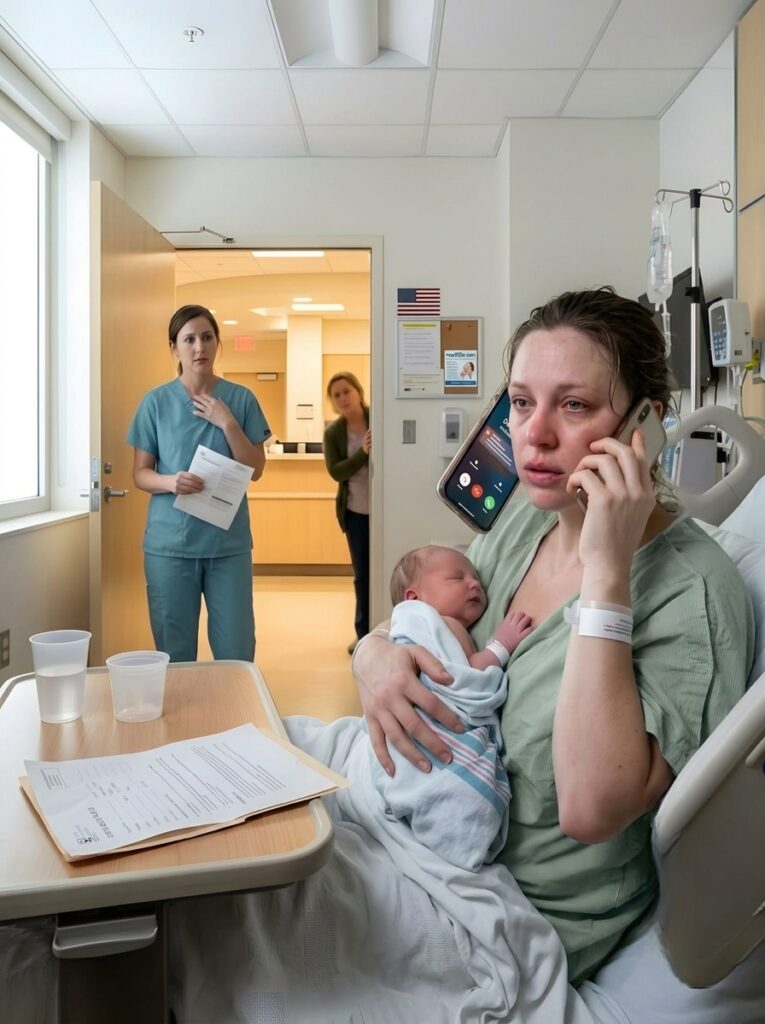
The nurse looking down at the discharge papers.
The bus stop outside.
I used to think the cruelest part was that they left.
It wasn’t.
The cruelest part was that they expected me to stay small afterward.
They expected the quiet version of me to keep protecting the life they had built from my silence.
But men like Daniel do not underestimate quiet women by accident.
They do it because silence has paid them before.
Mine stopped paying at 7:18 p.m. from a hospital bed, with my newborn against my chest and my wristband still on.
And when Daniel called two hours later, shaking because everything was gone, he finally learned the truth.
Nothing had disappeared.
It had simply gone back behind the door where it belonged.