HE MARRIED MY SISTER FOR A REASON
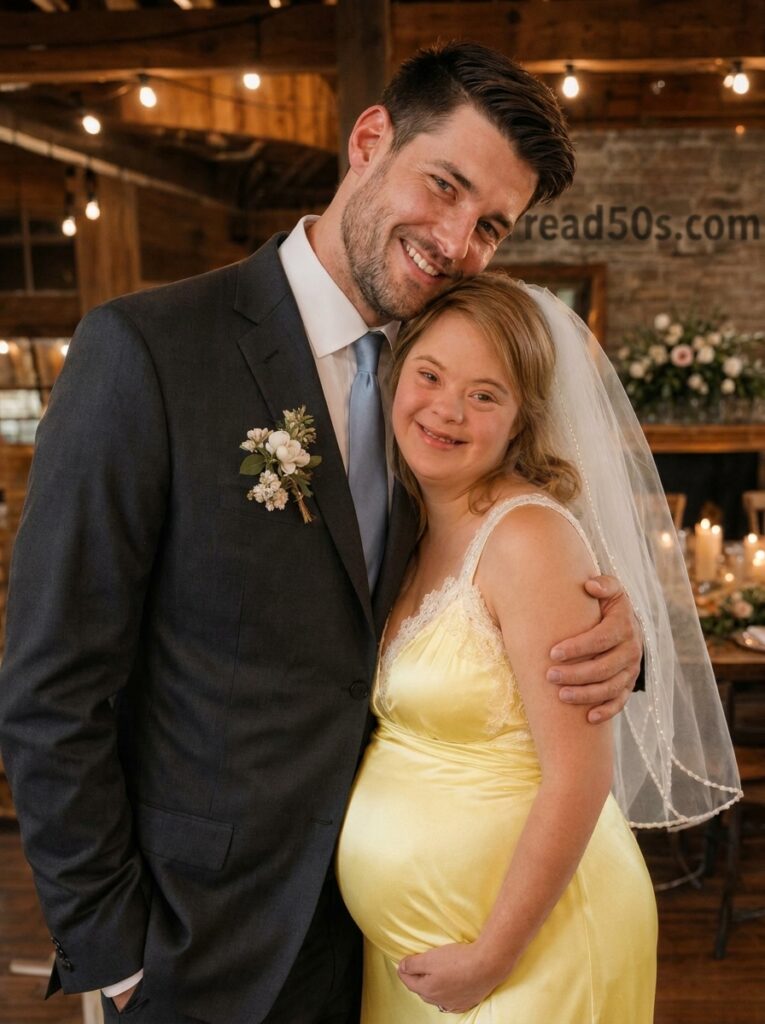
My best friend married my younger sister, Rosie, who has Down syndrome.
While she was fighting for her life in surgery, he held my hands and said, “Now it’s time for you to understand why I truly married her.”
Rosie is one year younger than I am.
Growing up, some children avoided her or assumed she couldn’t understand them because she had Down syndrome.
Ben never did.
He had been my best friend since we were six, but he always made certain Rosie knew she belonged with us.
When other children refused to choose her during recess, Ben placed her on his team.
When someone mocked the careful way she spoke, he told them that Rosie understood more than they ever would.
In fourth grade, he even promised to take her to prom.
“Rosie, you’ll always have Ben and me,” I used to tell her.
Everyone believed Ben and I would eventually marry.
We attended the same schools, spent nearly every weekend together, and knew each other’s families better than most relatives did.
But years later, Ben didn’t ask me to marry him.
He asked Rosie.
When they announced their engagement, I cried more than she did.
My closest friend became my brother, and my sister finally had the kind of future strangers had always claimed would never be possible for her.
Ben never treated their marriage as an act of charity.
He loved her humor, stubbornness, careful memory, and the way she noticed details everyone else missed.
Rosie loved that he never spoke around her, over her, or for her unless she asked.
Then she became pregnant with twins.
Our entire family celebrated.
But the pregnancy was difficult from the beginning.
Rosie required constant monitoring, specialist appointments, and medication. Ben attended every appointment and kept a notebook filled with questions for the doctors.
At thirty-four weeks, Rosie suffered a placental abruption and was rushed into emergency surgery.
The doctors were trying to save her and both babies.
Ben and I sat together in the waiting area beneath unforgiving fluorescent lights.
His elbows rested on his knees, and his face had turned almost white.
Every few seconds, he whispered Rosie’s name.
Then he suddenly stood and pulled me into an empty hallway.
“What’s happening?” I asked.
“Before they took her into surgery, Rosie made me promise I would tell you something if she didn’t wake up.”
“Tell me what?”
Ben looked as though he was trying not to break apart.
“Now it’s time for you to understand why I really married her.”
My stomach sank.
“Why would you say something like that?”
The worst explanations rushed through my mind.
Had Ben married Rosie because of money?
Our father, Richard Hale, controlled Hale Medical and several family trusts.
Had Ben discovered something about Rosie’s inheritance?
Or had he married her because he had once loved me and wanted to remain near me?
Ben carefully studied my expression.
“It’s worse than anything you’re imagining,” he said. “You should sit down.”
He reached into his jacket and removed a folded piece of paper.
Rosie’s handwriting covered four pages.
I read the first line.
Claire, if you are reading this, I may be dead. Dad killed Mom, and without knowing it, you gave him the perfect alibi.
I screamed so loudly that two nurses came running.
Ben caught me before my knees struck the polished floor.
The letter slipped from my hand and landed faceup beneath the fluorescent lights.
The words remained visible.
Dad killed Mom.
“No,” I gasped.
Ben held my shoulders.
“Claire, listen to me.”
“No.”
“Please.”
I pushed him away so hard that his back struck the wall.
Behind the double doors, Rosie was fighting for her life while doctors tried to deliver her premature children.
Less than twenty minutes earlier, Ben had been sitting beside me, whispering her name as though it were a prayer.
Now he was telling me that the truth behind their marriage involved our mother’s death.
I had imagined greed.
Inheritance.
Pity.
Even the possibility that he had married Rosie because he wanted access to me.
I had not imagined murder.
One nurse bent down to retrieve the letter.
Ben reached it first.
“It’s private.”
“Is she having a panic attack?” the nurse asked.
“I’m fine,” I lied.
“You don’t look fine.”
“My sister is in surgery.”
The nurse’s expression softened.
“You should sit down.”
Those were almost the same words Ben had used.
I hated them now.
“I said I’m fine.”
The nurses exchanged a worried glance before returning through the double doors.
I stared at Ben.
“You knew?”
His jaw tightened.
“How long?”
“Not everything.”
“That is not an answer.”
“Six months.”
The words struck harder than my scream had.
“Six months?”
“Rosie discovered evidence last winter.”
“And neither of you told me?”
“She wanted to be certain.”
“My mother has been dead for seventeen years.”
“I know.”
“You were at the funeral.”
“I know.”
“You stood beside me while they lowered her coffin into the ground.”
“I know, Claire.”
His voice cracked.
That nearly broke me.
Ben had seen me cry when my childhood pet died, when I failed my driving test, when my first serious boyfriend betrayed me, and when my mother’s car was recovered from Bellweather Ravine.
He had never been good at lying.
But he had hidden this for half a year.
Rosie had hidden it too.
I pointed toward the letter.
“Give it to me.”
“Rosie wanted me to explain first.”
“She may never wake up.”
The words escaped before I could stop them.
Ben flinched as though I had struck him.
I regretted saying them immediately, but I didn’t take them back.
“Give me the letter.”
His fingers tightened around it.
“It isn’t only a letter.”
“What is it?”
“A key.”
“To what?”
“To everything Richard Hale has spent seventeen years burying.”
I laughed once, a sharp and broken sound.
“My father?”
“Yes.”
“Our father.”
His eyes moved toward the operating-room doors.
The motion was slight, but I noticed it.
“What does that mean?”
Ben remained silent.
“Ben.”
He looked back at me.
“Richard Hale is Rosie’s biological father,” he said. “He may not be yours.”
The hallway seemed to tilt.
I pressed my hand against the wall.
“No.”
“Rosie found inconsistencies in your birth records.”
“No.”
“She discovered payments to a private clinic in Vermont, a sealed petition, and correspondence between your mother and another man.”
“Stop.”
“Claire—”
“Stop saying my name as though you already know who I am and I don’t.”
His eyes filled with tears.
That frightened me more than the letter.
Ben had always been steady.
As children, he climbed trees first so he could identify the safest branches.
When Rosie became separated from us during a crowded festival, Ben found her sitting beneath a lemonade stand before the police did.
When our mother died, he slept on the floor outside my bedroom because I was afraid to be alone.
Now he looked as lost as I felt.
I took the letter from him.
Rosie’s handwriting was rounded and deliberate. As a child, she pressed pencils so firmly into paper that she sometimes tore the pages.
Even now, she wrote as though every sentence deserved to be carved into stone.
I began again.
Claire, if you are reading this, I may be dead. Dad killed Mom, and without knowing it, you gave him the perfect alibi.
You were sixteen, and none of this was your fault. You believed what he told you because he was our father and because you were frightened. I believed him too. But I remember more than everyone thinks I remember.
A memory rose from somewhere deep inside me.
Rain beating against the kitchen windows.
My father entering through the back door with a dark stain on his shirt.
His voice shaking as he said there had been an accident at the workshop.
Me handing him the keys to my mother’s car because he claimed she had forgotten them.
But that made no sense.
Her car had been found miles away at the bottom of the ravine.
I kept reading.
The night Mom disappeared, Dad asked you to say he had been home since nine. You told the police he was upstairs taking a shower when Mom called to say she was returning from Aunt Lydia’s house. You thought you heard the shower. You didn’t know he had left it running.
My hands began trembling.
The memory changed.
My father standing in the kitchen soaked from the rain.
The wall clock behind him.
Not 9:15.
11:42.
I had lied to the police.
He had taken my face between his hands and said, “Claire, your mother may be hurt. The police cannot waste time questioning me.”
I repeated his story exactly.
A sixteen-year-old girl trying to help find her mother.
Instead, I had protected the man Rosie believed had killed her.
I folded forward.
Ben caught me and lowered me onto a plastic chair.
“I’m going to be sick.”
He crouched in front of me.
“Breathe.”
“Don’t tell me to breathe.”
“I need you conscious.”
“Why? So you can tell me the rest of my life is a lie?”
“No. So we can stop him.”
I looked up.
“Stop him from what?”
Ben glanced down at the letter.
“Rosie believed Richard knew she had discovered the truth.”
Coldness spread through me.
“The pregnancy complication?”
“The doctors believe it happened naturally.”
“You don’t?”
“I don’t know.”
“But you suspect him.”
“I suspect Richard of anything now.”
Our father had visited the hospital that morning.
He kissed Rosie’s forehead before she was taken upstairs and called her his brave little girl.
Then he left, saying he couldn’t bear to watch his daughter suffer.
I remembered how tightly he gripped Ben’s shoulder.
“Take care of her.”
Had it been a plea?
Or a warning?
“Where is he?” I asked.
“Probably at home.”
“Call the police.”
“We don’t have enough evidence yet.”
“There is a letter saying he murdered Mom.”
“It is a letter written after Rosie reviewed evidence we haven’t secured.”
“What evidence?”
Ben looked down the hallway and lowered his voice.
“It’s inside your house.”
I stared at him.
“What?”
“Rosie hid something there.”
“Why my house?”
“Richard never visits without warning. She believed it was the safest place.”
“What did she hide?”
“A flash drive.”
“What’s on it?”
“Audio recordings, bank records, scanned letters, and part of a video.”
“A video of what?”
“Your mother’s final night.”
I stood so quickly that the chair scraped backward.
“We’re going.”
“We cannot leave until we know whether Rosie and the babies survived.”
The operating-room doors opened.
A surgeon stepped through wearing blue scrubs, her mask hanging beneath her chin.
Ben froze.
The surgeon’s eyes found him.
“Mr. Carter?”
He moved toward her.
I followed, every other horror pushed aside by the only one that mattered in that moment.
“Your wife survived the surgery,” the doctor said.
Ben made a sound halfway between a sob and a laugh.
I grabbed his arm.
“And the babies?”
“One boy and one girl. Both are alive.”
My knees weakened.
“They’re extremely premature, but their heart rates are stable. The neonatal team is taking them to intensive care.”
Ben covered his mouth.
“What about Rosie?”
“She lost a significant amount of blood. We controlled the bleeding, but she experienced reduced oxygen and went into cardiac arrest for forty-three seconds.”
The relief disappeared.
“Is she awake?” I asked.
“No.”
“Will she wake up?”
“We don’t know yet. The next twenty-four hours will tell us more.”
Ben closed his eyes.
“Can I see her?”
“Soon. A nurse will take you to the twins first.”
When the surgeon left, Ben and I stood together in silence.
Rosie was alive.
The twins were alive.
That should have been enough to fill every part of me.
But I still held a letter saying the man who raised us had killed our mother.
And the evidence was hidden beneath my roof.
Ben finally looked at me.
“You need to retrieve the drive.”
“You’re coming.”
“I’m not leaving Rosie.”
“Then I’ll go alone.”
“No.”
“You said it has to be secured.”
“I also said Richard may know.”
“I’m not waiting while he destroys it.”
Ben took out his phone.
“I’ll call someone I trust.”
“Who?”
“My cousin Daniel. He works major crimes for the county sheriff’s department.”
“Call him.”
Before Ben could dial, my phone rang.
The screen showed one word.
DAD.
Neither of us spoke.
The phone continued ringing.
“Don’t answer,” Ben said.
“If he suspects something, ignoring him could make it worse.”
“Claire.”
I accepted the call.
“Dad?”
“Sweetheart.” His voice sounded warm and tired. “How is she?”
I looked at Ben.
“She survived.”
A pause.
Barely half a second.
But I heard it.
“Thank God,” Richard said.
“The twins are alive too.”
“Thank God,” he repeated without hesitation.
“Where are you?”
“At home. I couldn’t sit inside that hospital. Too many memories.”
My mother’s body had been taken to that same hospital after being recovered from the ravine.
Richard had identified her.
I tightened my grip on the phone.
“Did Rosie say anything strange to you recently?”
Ben shook his head urgently.
My father remained quiet.
“Strange in what way?”
“About Mom.”
The silence lengthened.
Then he sighed.
“Claire, your sister has been under enormous stress. Pregnancy can make anyone emotional, and Rosie sometimes becomes fixed on ideas she doesn’t fully understand.”
Anger rose inside me.
Rosie understood far more than people gave her credit for.
She always had.
“What idea?”
“I don’t know. You’re the one asking.”
His answer was too smooth.
“Did she accuse you of something?”
“Has Ben been talking to you?”
Ben’s eyes narrowed.
“Why would Ben talk to me?”
“Because he has been filling Rosie’s head with nonsense for months.”
“What kind of nonsense?”
“Old financial records. Your mother’s diaries. Things that should have remained buried.”
Things that should have remained buried.
He realized his mistake too late.
“Dad,” I whispered, “what did you do?”
His breathing changed.
When he spoke again, the warmth had vanished.
“Where is Ben?”
“Taking me to see the babies.”
“Put him on the phone.”
“No.”
“Claire.”
It was the voice he used when I was a teenager—the voice that made obedience feel like safety.
But I was no longer sixteen.
“What did you do to Mom?”
“You’re upset. I’m coming to the hospital.”
“No.”
“You should not be alone with Ben.”
“Why?”
“Because Ben did not marry your sister for love.”
The words landed exactly where he intended.
I looked at Ben.
He could hear Richard through the phone.
“What are you talking about?”
“He married Rosie to gain control of her shares in Hale Medical.”
Ben silently told me to end the call.
Richard continued.
“Your mother established a trust. If Rosie became medically incapacitated, voting authority transferred to her spouse. Ben discovered that.”
“That isn’t true.”
“Ask him why he proposed three weeks after gaining access to our corporate archives.”
I stared at Ben.
He went still.
“Ask him why he secretly met with a trust attorney before buying Rosie’s ring.”
“Ben?”
Part of it was true.
I could see it in his expression.
Richard’s voice softened.
“He manipulated both of you. I tried to protect Rosie, but she refused to listen. Now she is unconscious, and Ben controls everything she owns.”
I ended the call.
The corridor became painfully quiet.
“You met with a trust attorney?”
Ben nodded.
“Before you proposed?”
“Yes.”
“You accessed Hale Medical’s archives?”
“Yes.”
“Why?”
“Because Rosie asked me to.”
I laughed bitterly.
“Of course she did.”
“She discovered irregular transfers from her trust.”
“And marrying you gave you authority over it.”
“If she became incapacitated, yes.”
“Which she now is.”
Pain crossed his face.
“You think I planned this?”
“I don’t know what to think.”
“I attended every specialist appointment, every injection, and every night she was too frightened to sleep.”
“That doesn’t answer the question.”
“I love her.”
“You said the reason you married her was worse than anything I imagined.”
“Because the truth surrounding it was worse. Not because our marriage was false.”
He removed his wallet and handed me a worn laminated photograph.
It had been taken during our fourth-grade spring fair.
Rosie stood between us in a yellow sweater, holding the blue ribbon she won for a clay bird.
I was smiling at the camera.
Ben wasn’t.
He was looking at Rosie.
Even at nine years old, the expression was unmistakable.
Adoration.
On the back, Rosie had written:
Ben says he will marry me if I still like him when we are old. I think twenty-five is old.
My throat closed.
“She gave me this the night I proposed,” Ben said. “She remembered the promise. So did I.”
“Then why hide everything from me?”
“Because Rosie wanted to protect you until we had proof.”
“Protect me from what?”
“From learning that Richard Hale may have built your life around a crime.”
A nurse appeared and told Ben he could see the twins.
He looked toward the NICU and then back at me.
“Please wait here.”
“I’m going home.”
“I won’t let you go alone.”
“You don’t get to let me do anything.”
His expression tightened.
I suddenly heard Rosie’s voice in my memory.
“Claire, Ben gets bossy when he’s scared. You get mean.”
She had said it after the three of us became trapped on a ski lift years earlier.
The memory nearly brought me to tears.
I touched Ben’s sleeve.
“Go see your children.”
“What will you do?”
“Ask Daniel to meet me at my house.”
“Promise you won’t go inside alone.”
“I promise.”
“And don’t explain everything over the phone.”
“Why?”
“Rosie believed someone inside the sheriff’s department helped Richard after your mother died.”
My hand dropped.
“Who?”
“She didn’t know.”
Ben looked toward the room where Rosie lay unconscious.
“Trust no one who tells you Rosie was confused.”
Then he walked away.
THE DRIVE IN ROSIE’S DIARY
Daniel Mercer arrived at my house forty minutes later in an unmarked black sedan.
He looked like an older, heavier version of Ben, with the same dark eyes and habit of checking every doorway before entering.
I stood beneath a sky darkened by approaching rain.
“You came alone?”
“Yes.”
“Did you tell anyone?”
“No.”
“Show me your badge.”
His eyebrows rose.
“You have known me since you were ten.”
“Show me.”
He did.
Then I allowed him inside.
My house had never felt dangerous before.
It was a narrow craftsman on Willow Street with pale green siding, uneven floors, and kitchen cabinets Rosie had helped me paint yellow.
“Sunshine belongs inside too,” she had told me.
Now every shadow felt occupied.
Daniel locked the door behind us.
“What exactly did Rosie hide?”
“A flash drive.”
“Where?”
“I don’t know.”
He studied me.
PART 2: He Married My Sister for a Reason—And the Truth Was Written in My Name