PART 1 — THE BLOOD ON THE TILES
The harsh blue light of my phone burned my eyes, but I couldn’t force myself to look away.
My husband’s messages sat on the screen like a row of blunt surgical instruments, carelessly cutting through whatever remained of our marriage.
Why couldn’t you just let it go?
You know how Mom gets. You always make things a bigger deal than they are.
Don’t play the victim. You’ll be home tomorrow. Apologize to my mother, and we’ll put this behind us.
The only sound in my hospital room was the mechanical drip of the IV beside my bed.
My left cheek pulsed with every heartbeat. Three thick stitches pulled painfully at the base of my scalp whenever I swallowed. My head felt as though someone had filled it with broken glass.
When the night nurse entered to check my vital signs, she moved carefully around me as if I might shatter.
“Where is your family?” she asked gently.
“I don’t have anyone to call right now.”
The words sounded strange even to me.
It wasn’t that I had no family.
I had a husband, a mother-in-law, a sister-in-law, and relatives who had spent years reminding me that marriage meant joining their family.
But in the Columbus condo I had spent five years maintaining, there had never been a chair reserved for me when I needed somewhere safe to sit.
The nightmare began hours earlier with something as ordinary as a pot of beef stew.
I arrived home at seven in the evening after a long day at work and an exhausting stop at the pharmacy to collect blood-pressure medication for my mother-in-law, Brenda.
Before my hand left the doorknob, the smell of burned meat struck me.
Thick black smoke rolled from the kitchen.
Brenda was leaning against the granite counter, watching loud videos on her phone while my Dutch oven scorched on the stove.
“Brenda, the bottom is completely burned,” I said, dropping my work bag and turning off the burner. “Let me make something else.”
She didn’t look up.
“You don’t like my cooking? I was trying to make a proper meal because your sensitive stomach apparently can’t handle takeout.”
“My stomach hurts because of the stress in this house,” I muttered while wiping soot from the stovetop.
Her phone struck the counter with a sharp crack.
“My son married you five years ago, and you still haven’t given him a child. I lose sleep over it every night, and you have the nerve to complain about stress?”
I had endured versions of that sentence for half a decade.
At first, I tried to explain the doctor visits, the fertility treatments, and the physical toll they took on me.
Eventually, the fight drained out of me.
I learned to serve the soup, organize the medication, wash the dishes, and swallow every insult.
That evening, I was too exhausted to continue pretending.
I walked into the living room, hoping for a moment to breathe.
Austin’s sister, Courtney, was lounging on the sofa while her toddler dismantled the room around her.
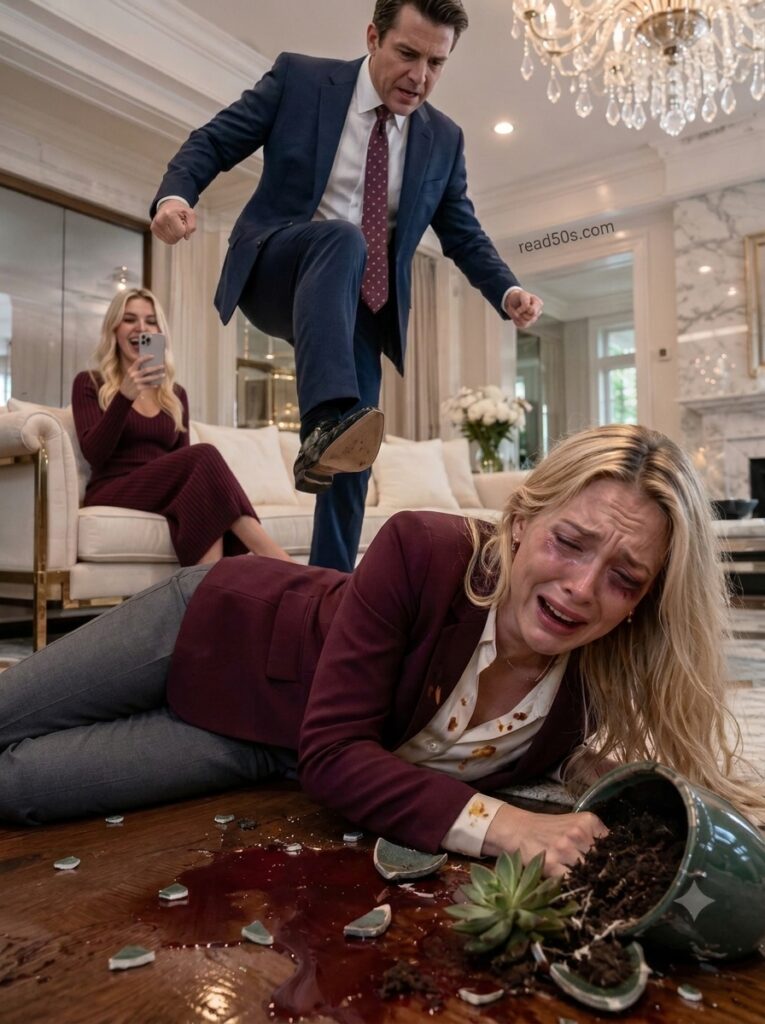
He had torn leaves from the jade plant I had spent three years nursing back to health and dumped the soil into my slippers.
“Sweetheart,” I said softly, crouching beside him. “Let’s leave the little tree alone. It’s already having trouble growing.”
Courtney paused with a potato chip halfway to her mouth.
“It’s a plant, Nina. Why do you make everything into a production? You’re so petty. No wonder you and Mom are always fighting.”
Brenda’s voice carried from the kitchen.
“Who can get along with her? She wanders around with that sour face, and the moment anyone criticizes her, she acts like a martyr.”
I stood with damp soil beneath my fingernails and placed the pharmacy bag on the dining table.
“Brenda, I bought your medication. You shouldn’t eat the burned stew, so I’ll make pasta.”
“Don’t play the saint with me!”
She marched into the dining room.
“I cooked that meal with my own hands. What right do you have to throw it away? In hard times, we survived on worse. You’re simply disgusted by my presence. And don’t think earning your little salary gives you permission to control my family.”
For the first time in 1,825 days of marriage, I didn’t lower my eyes.
“Brenda, I pay half the mortgage on this condo. I support this family financially, physically, and emotionally. I’m not controlling anyone. I’m asking for a normal, peaceful home.”
The word normal ignited something in her.
She crossed the room and struck me across the face.
The force sent a sharp ringing through my ears. A white haze covered my vision.
Before I could steady myself, she shoved both hands against my chest.
“How dare you talk back to me in my son’s house!”
My heels caught against the raised wooden threshold.
I fell backward.
The back of my head struck the reinforced corner of the entryway shoe cabinet.
The sound was deep and hollow.
Heat spread across my scalp and down my neck as blood pooled beneath my hair and across the pale gray tiles I had personally chosen.
Brenda froze.
For one brief second, panic crossed her face.
Then her expression hardened.
“Stop pretending,” she said. “I barely touched you.”
Courtney rose nervously.
“Mom, look at the floor. Maybe we should call Austin.”
“Why? So he can rush home and make me look like the villain?”
I lay on the cold tile, unable to move.
For nearly thirty seconds, both women stood around me without calling for help.
My fingers finally found the phone in my blazer pocket.
I didn’t call my husband.
I called emergency services.
When the paramedics arrived, our neighbor Wanda was returning from the grocery store.
Tomatoes rolled across the hallway when she dropped her canvas bag in horror.
Brenda immediately transformed.
She began wailing and striking her thighs for emphasis.
“What a disaster! She tripped over the rug and fell! I’ve been caring for her all evening, and now everyone will blame me. Why does an old, fragile mother deserve this?”
As the paramedics fitted a cervical collar around my neck, Wanda looked from the blood on the floor to Brenda’s performance.
She didn’t argue.
Instead, she picked up the pharmacy bag, placed it carefully beneath my trembling fingers, and leaned closer.
“Don’t worry, Nina. When you’re stronger, we’ll sort this out.”
At the emergency department, the nurse asked for my emergency contact.
I gave her Austin’s number.
He answered only on the third attempt.
Wind and loud male laughter filled the background.
“Austin, you have a bite! Reel it in!” someone shouted.
The nurse frowned.
“Mr. Bennett, your wife has suffered a serious head injury and is currently hospitalized. You need to come immediately.”
There was a pause.
“How bad is it?” Austin asked, sounding irritated rather than frightened.
“She requires stitches and overnight neurological monitoring.”
“And my mother? Is she all right? Did she get her blood-pressure medication?”
The nurse looked at me with open pity.
I turned my face toward the wall.
Thirty minutes later, Austin still hadn’t arrived.
Instead, my phone buzzed with the messages blaming me.
I placed it facedown on the hospital blanket.
Sleep never came.
My head throbbed. My cheek burned. My chest felt wrapped in wire.
But beneath the physical pain, my mind became frighteningly clear.
I opened every banking application, digital receipt folder, and financial record I had.
I began documenting five years of mortgage payments, utilities, medical expenses, groceries, loans, home improvements, and unpaid family favors.
Every transaction became another piece of a life I had allowed them to erase.
At two in the morning, I messaged Denise, the building’s HOA manager.
Could you remotely open the service entrance tomorrow morning at eight? I need to move my belongings out of the unit.
Her reply came almost immediately.
Nina? You’re in the emergency room. Wanda told me about the blood. What happened?
I’m fine. Please don’t ask questions yet. I need the doors at eight.
A thumbs-up appeared.
Then another message followed.
I usually stay out of residents’ family issues, but the way they treat you is completely unacceptable. Whatever you need, I’ll open the doors.
Something inside me broke.
A near-stranger had validated the reality my husband had spent years denying.
At six-thirty in the morning, before the shift change, I removed the medical tape from my hand and told the nurse I was leaving against medical advice.
She warned me about vertigo, delayed concussion symptoms, and the possibility of internal complications.
“You shouldn’t leave in this condition.”
“I won’t make any sudden movements,” I said calmly. “I’m only going to take my life back.”