My Family Left My Grandfather in a Nursing Home and Fought Over His Tools After He Died. Then a Fire Chief Saw the Burned Silver Ring I Wore, Went Silent, and Ordered the Building Locked.
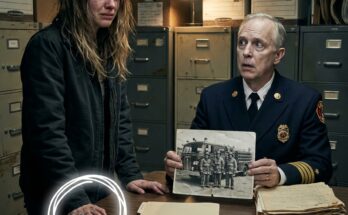
The chief shut the office door, then placed both hands on the desk as if he needed a moment to steady himself.
“My name is Daniel Reeves,” he said quietly. “Forty-two years ago, Leonard Cross carried me out of a warehouse fire after the roof came down.”
He slid the photograph closer.
The building had been a textile warehouse. An explosion trapped six firefighters inside. According to the official report, evacuation had been ordered after the second collapse warning. Three men made it out. Two were buried under debris.
And my grandfather had gone back in.
“He had already reached the exit,” Chief Reeves said. “He could have saved himself. Instead, he heard me yelling. My leg was pinned. Smoke was filling the room. He crawled back under burning beams, cut me loose, and dragged me through fire that should have killed both of us.”
His voice cracked.
“He went back again for another man.”
That man had lived too.
But my grandfather had suffered serious lung damage and burns down one side of his body. He retired early. The city honored the survivors in a private ceremony and had six custom rings made from melted silver recovered from the warehouse’s vault. Each ring bore a flame mark and the station crest. Five had stayed with the men or their families.
The sixth had belonged to Grandpa Leonard.
“He refused publicity,” the chief said. “Wouldn’t let us put his name in the newspaper. He said, ‘Do your job. Go home. Don’t make a parade out of survival.’”
I sat down slowly, tears pressing behind my eyes.
All those years my family had called him difficult, strange, proud.
They had never asked what the burn scars on his arm were from.
Chief Reeves opened the file. Inside were commendations, witness statements, and a letter written by my grandfather twenty years earlier. It was addressed to the fire department and to whoever kept his ring.
In that letter, Grandpa wrote that if his family ever came looking for recognition after ignoring him in life, they were not to receive anything in his name. He asked that any memorial fund or insurance settlement left from the warehouse case go instead to “the one person who still sat beside me when silence was all I had left.”
Me.
I stared at the page.
There was more.
Because of a legal settlement tied to the warehouse explosion, a quiet survivor’s trust had remained open for the six firefighters and their heirs. Most families had already received their portions over the years. My grandfather had never touched his.
His share had grown.
The amount waiting in trust was enough to pay off my student loans, buy a home, and still fund a scholarship at the town’s fire academy.
When my family found out, everything changed.
My mother cried and said she had been “overwhelmed.” My father tried to argue that blood relatives deserved equal treatment. My brother insisted Grandpa “would have wanted fairness.”
But the letter was airtight.
They had ignored him in the nursing home. Missed his funeral. Sold his belongings. And the trust attorney had records showing that my mother tried to claim some of his possessions before probate had even closed.
It didn’t go well for them.
The court upheld Grandpa’s letter. The ring belonged to me. The trust came to me. The fire department publicly honored Leonard Cross at the next city ceremony, and for the first time in decades, his full story was told.
A bronze plaque was placed in Station One.
I used part of the money to create the Leonard Cross Scholarship for children of retired firefighters. I donated his toolbox to the station museum. And I kept the ring.
My mother didn’t attend the dedication.
My father stood in the back and left early.
But when the chief handed me the folded flag and said, “Your grandfather saved more lives than he ever let people know,” I felt something settle inside me.
Grandpa had been alone at the end.
But he had not been forgotten.
And the family who treated him like a burden had to live with the truth that the quiet old man they discarded had once walked through fire carrying other people home.
End.