The next morning, Detective Ortiz called.
“We found the missing key.”
“Where?”
“In Frank Mercer’s coat pocket.”
Wade’s father.
Frank claimed he had no idea how it got there.
Ortiz did not believe him.
Neither did I.
Frank asked to meet.
He told me Wade had a younger brother named Ethan.
When Wade was sixteen, Ethan was eight.
Frank admitted that when his own children misbehaved, he used to lock them in a cellar.
Sometimes for hours.
Sometimes overnight.
He believed fear taught respect.
Eventually, Wade began doing the same thing to Ethan.
One night, Wade locked his little brother inside a coal room for nineteen hours.
Ethan survived.
But at fifteen, he ran away.
Frank and Patricia never reported him missing because Ethan had threatened to expose what happened inside their home.
They hired private investigators instead.
Twenty-three years passed.
Then, six months before Diane’s wedding, Frank’s investigator finally found Ethan.
He was living under the name Thomas Reed.
Less than twelve miles from Diane.
And he worked as a locksmith.
Ortiz interviewed him.
Ethan had an alibi for the wedding.
But he knew Diane.
He had changed the locks at her house seven months earlier.
Diane had told him she was afraid of Wade.
I confronted her.
“How much did you know?”
She finally admitted Wade had changed after their engagement.
At first, normal rules.
Chores.
Bedtimes.
Screen limits.
Then his behavior became controlling.
If Tommy cried, Wade called him manipulative.
If Ava argued, Wade called her disrespectful.
If Diane disagreed, he accused her of undermining him.
She admitted seeing the lock months earlier.
“You stayed.”
“I made him remove it.”
“It came back.”
“I know.”
“And you stayed.”
“I was afraid.”
Wade monitored her phone.
Controlled money.
Threatened to interfere with custody while I was overseas.
He told Diane nobody would believe her because she had defended him for so long.
She had secretly bought a prepaid phone.
Then she discovered Wade sometimes shouted Ethan’s name during nightmares.
She researched the Mercer family.
Eventually Ethan contacted her and warned that Wade could escalate.
“You knew what he had done to Ethan.”
“Yes.”
“And you kept my children in that house.”
“I was trying to get us out.”
“For seven months?”
“I was collecting evidence.”
I slammed my hand on the table.
“Ava was collecting evidence!”
Diane broke down.
Then she said something else.
She had planned to leave after the wedding.
She had begun investigating financial irregularities because Ethan told her another secret.
Wade had been married before.
Her name was Caroline Mercer.
Twenty-two years earlier, Caroline disappeared.
Wade claimed she had left.
No missing-person report had ever been filed.
No Social Security activity.
No new passport.
No bank accounts.
No taxes.
No contact with her only sister.
Caroline had seemingly vanished from the world.
Then I discovered something else.
Ava already knew Ethan.
She had found his card in Diane’s desk and contacted him herself.
He helped her back up photographs somewhere Wade could not erase them.
Then he gave her a tiny recording device.
“If adults didn’t believe pictures,” Ava explained, “he said get sound.”
She had months of recordings.
Those recordings changed everything.
Wade telling Tommy:
“Crying only makes the lock stay longer.”
Tommy begging to use the bathroom.
Wade refusing.
A slap.
Doors.
Threats.
Then came the wedding recording.
Music and laughter sounded faintly in the background.
Tommy said:
“I don’t want to call you Dad.”
Wade answered:
“Then you don’t want to be part of this family.”
“I have a dad.”
“Your dad lives in Germany.”
“He’s coming back.”
Wade paused.
“Maybe.”
Then footsteps.
A door.
A metallic click.
Ava’s voice:
“Let him out.”
Wade laughed.
“You kids have ruined enough today.”
“I’m telling Mom.”
“Your mother is busy.”
“I’ll tell everyone.”
Then came the sound of Wade striking Ava.
She gasped.
And he said:
“Nobody here believes you.”
Then the fight exploded.
People shouting.
Furniture moving.
Ava screaming:
“WHERE IS THE KEY?”
Again.
Again.
Again.
Detective Ortiz stopped the recording.
“Ava wasn’t trying to kill Wade.”
“I know.”
“She was interrogating him.”
“She’s twelve.”
Ortiz’s eyes hardened.
“That’s exactly the problem.”
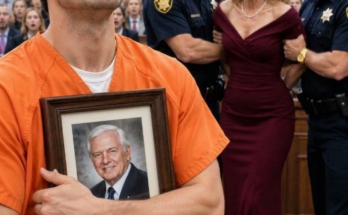
Wade was arrested again.
This time, bond was denied.
The evidence also reopened the mystery of Caroline Mercer.
Frank and Patricia hired separate attorneys.
Weeks passed.
Ava and Tommy began therapy.
Diane was limited to supervised contact.
I received an emergency stateside reassignment.
Then Ava noticed something inside the professional wedding photographs.
At the beginning of the reception, Wade’s mother Patricia wore a thin silver chain.
A small brass key hung from it.
Later photographs showed the chain empty.
Police had found the key in Frank’s pocket.
Someone had moved it.
Then Ava revealed one recording she had kept back because Ethan had warned her not to trust anyone until she understood it.
Two weeks before the wedding, Patricia had confronted Wade.
“You can’t keep doing this.”
“He needs discipline.”
“He’s seven.”
“So was Ethan.”
Then Patricia whispered:
“Ethan was not the one you were supposed to copy.”
Wade laughed.
“Dad taught us both.”
“No.”
Patricia sounded terrified.
“Your father taught you fear.”
Then:
“You learned the rest from Caroline.”
The answer led investigators to a storage unit tied to one of Wade’s companies.
Inside were three locked trunks.
One contained Caroline’s clothes.
Another contained photographs documenting years of violence in Wade and Caroline’s marriage.
Caroline had hurt Wade.
Wade had hurt Caroline.
Frank and Patricia knew.
Nobody intervened.
The third trunk contained Caroline’s diary.
The final entries said she had become pregnant.
She wanted to leave.
Wade threatened her.
The last entry read:
I told Ethan everything. If I disappear, he knows where to look.
Ethan had been fifteen.
Then he vanished again.
His apartment was empty.
His van gone.
His phone off.
Three weeks later, Ava received a package.
Inside was an old green plastic dinosaur—the same kind Ethan had held in a childhood photograph.
And a note:
You believed Tommy when nobody believed me. Never let them teach you silence. — E
There was also an address.
A farmhouse in rural Vermont.
Police searched it.
Ethan was gone.
But beneath a loose floorboard they found a metal box.
Caroline’s passport.
Her wedding ring.
Old photographs.
And a cassette tape recorded twenty-two years earlier.
The tape captured Caroline confronting the Mercer family.
Wade.
Frank.
Patricia.
A frightened fifteen-year-old Ethan secretly recording nearby.
The argument escalated.
A crash.
A scream.
Then Wade’s voice.
For years, investigators believed he said:
“What did you do?”
Frank responded.
Then came the sentence that buried the truth for decades:
“Nobody calls the police.”
They discussed moving Caroline.
Destroying evidence.
Inventing a story that she had simply left.
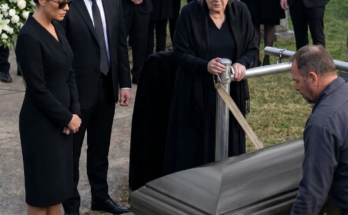
Soon afterward, remains were found beneath concrete at an old Mercer warehouse.
They were identified as Caroline.
Wade faced charges connected to her death as well as the abuse of Ava and Tommy.
Four months after the wedding, I sat beside Ava in family court.
Wade’s attorney tried to portray her attack as proof she was unstable.
The prosecutor played the wedding recording.
When Wade’s voice said:
“Nobody here believes you,”
the courtroom went completely still.
Then Ava’s screams for the key filled the room.
The juvenile assault case against her had already been dismissed.
The judge ordered the records sealed.
Then she asked Ava if she wanted to speak.
Ava stood.
Her knuckles had healed.
A small scar remained.
“I don’t think hitting people is good.”
She swallowed.
“I know I hurt Wade badly.”
“But I asked for help before I hit him.”
My eyes burned.
“I asked for help for months.”
“I showed adults pictures. I told them what was happening. People kept telling me maybe I misunderstood.”
Then she looked at the judge.
“At the wedding, Tommy was locked up and Wade told me nobody believed me.”
“I believed him about one thing.”
The judge leaned forward.
“What?”
Ava looked toward me.
“That nobody was coming.”
Then she said:
“I don’t want another kid to think that.”
The judge’s eyes glistened.
“Neither do I.”
Diane later pleaded guilty to misdemeanor child endangerment for failing to act after learning about the confinement.
At sentencing, she did not ask Ava or Tommy to forgive her.
She told them:
“I kept waiting for the right moment.”
“I told myself tomorrow would be safer.”
“But every tomorrow I waited became another day you were afraid.”
Then she looked directly at Ava.
“You were a child. I made you carry an adult’s responsibility because I was afraid to carry it myself.”
Ava cried silently.
Diane said:
“I hope someday you can know I loved you even when I failed you.”
Ava answered:
“I know you loved us.”
Then:
“But love is supposed to do something.”
Diane nodded.
“Yes.”
And for once, no adult tried to explain Ava’s truth away.