My Husband Became an Organ Donor as His Final Wish—After He Died, His Doctor Stopped Me and Said, “There’s Something He Made Me Promise to Give You Only After He Was Gone.”
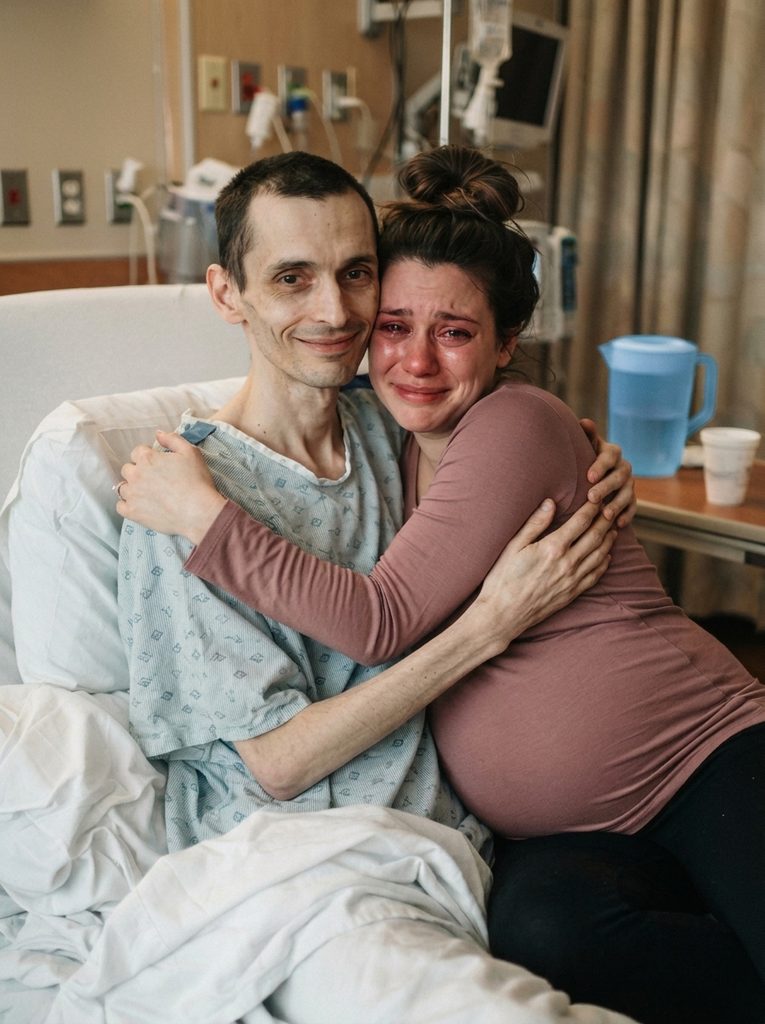
I thought honoring my husband’s final wish would be the hardest thing I ever had to do.
Then I learned Mark had prepared for something I never saw coming.
“Sally, wait!”
I kept walking down the hospital corridor.
If I stopped, someone would say Mark’s name again.
Someone would touch my arm and give me that careful expression people use when they do not know what to say to a woman who is eight months pregnant and has just watched her husband die.
“Sally, please.”
I turned.
Dr. Rivers was hurrying toward me with a plain envelope.
“Mark gave me this three weeks ago.”
I stared at it.
“What is it?”
“He made me promise not to give it to you until after he was gone.”
My stomach tightened.
“Why?”
“He said you would understand when you needed it.”
My name was written across the front.
Sally.
Nothing else.
“He also said you didn’t have to open it today.”
I almost laughed.
“That’s generous of him.”
Dr. Rivers gave me a sad smile.
Then I walked away carrying the final secret my husband had kept from me.
Two months earlier, secrets had not been part of our marriage.
Baby names were.
“Absolutely not,” I had told Mark.
“You rejected it too fast.”
“You suggested Clementine.”
We were sitting on the porch with his hand resting over my six-month belly.
“It’s a strong name.”
“For an orange.”
Mark laughed.
Even then, the sound caught slightly in his chest.
“Fine. Cecelia.”
I looked at him.
“Cecelia?”
“My grandmother used to sing that song with the name.”
“You said your grandmother sang everything badly.”
“Still counts.”
“That isn’t a reason to name a human being.”
“It made you smile.”
Then our daughter kicked beneath his palm.
Mark’s eyebrows rose.
“See? She voted.”
“She kicked you.”
“Strong approval.”
I covered his hand with mine.
“Cecelia.”
This time, it sounded right.
It sounded like our daughter.
We had wanted her for years.
Then, six months into my pregnancy, Mark got sick.
The doctors told us his condition was advanced.
Our plans became appointments.
Our nursery became the place where I cried when I did not want him to see me.
One evening, we sat on the porch while Cecelia kicked hard enough to move my shirt.
Mark rested his hand over her.
“If they can use anything when the time comes, I want to donate.”
“Please don’t talk about dying while she’s kicking.”
“That’s exactly why I have to.”
“Mark.”
“If I can’t watch her grow up, maybe somebody else gets more time with their family.”
“Don’t make dying sound noble. I’m already angry enough.”
He looked at me.
“I’m scared too, Sal.”
“I don’t know how to do this without you.”
“You don’t need to know yet.”
“What if I never know?”
He was quiet.
“Then you make it up as you go.”
“That’s a terrible plan.”
“It’s the only honest one I’ve got.”
I hated the answer.
Mostly because it was true.
By my eighth month, Mark had become much weaker.
One morning, I found him struggling with the buttons on his shirt.
“Give me that.”
“I’ve got it.”
“You put the third button in the fourth hole.”
He looked down.
“Fashion.”
“You look like a confused accordion.”
That pulled a laugh from him.
I stepped closer and fixed his shirt.
His hands trembled.
“Don’t look at me like that.”
“Like what?”
“Like you’re memorizing me.”
I stopped.
“I wasn’t.”
“You were.”
I smoothed his collar.
“I want to remember everything so I can tell Cecelia who you really were.”
His expression changed.
Then he sat on the bed.
“My mom asked about the donation again.”
Violet had always been good to me.
When morning sickness flattened me, she brought groceries and tiny yellow socks because she refused to let the baby “drown in pink.”
“I’ll talk to her.”
“No.”
“Why?”
“She thinks I shouldn’t donate.”
“She told you that?”
“More than once.”
“Why?”
Mark stared at his hands.
“She can’t handle the thought that something of mine might go to somebody else.”
“She’s losing her son.”
“I know.”
“Maybe she needs time.”
“She needs something to be angry at.”
His eyes met mine.
“And I don’t want that something to be you.”
I squeezed his hand.
“You’re asking me to stay out of it.”
“I’m asking you not to make her grief your job.”
A few weeks later, Mark began speaking privately with Dr. Rivers.
The second time, I asked directly:
“What are you arranging?”
“Something I need to handle.”
“Without me?”
“Yes.”
“That’s somehow worse.”
He smiled weakly.
“Please trust me.”
“I do trust you.”
“Then let me handle this one thing.”
So I did.
Mark died on a rainy Tuesday.
Afterward, the donation team explained that everything depended on medical suitability.
I answered questions.
Signed what needed signing.
Whenever anyone asked whether Mark had wanted this, I gave the same answer.
“Yes.”
Because he had.
Then Dr. Rivers stopped me.
And that night, I finally opened the envelope.
Inside was a flash drive.
And a note.
Please don’t watch this because you miss me.
Watch it if somebody makes you doubt me, Sally.
And more importantly, if someone makes you doubt yourself.
I read it twice.
“You’re dead,” I told the paper. “You don’t get to give instructions anymore.”
Cecelia kicked beneath my ribs.
I looked down.
“Your father is already annoying me from beyond the grave.”
But I did not watch the video.
Not yet.
Two days later, Violet came over.
I found her inside Cecelia’s nursery, refolding a blanket that had already been folded.
“Violet?”
She did not turn around.
“Did they take everything?”
“What?”
“From Mark.”
“They only proceeded with what was medically suitable.”
She gripped the blanket.
“And you’re fine with that?”
“No.”
I took a breath.
“But he wanted it.”
“Parts of him going to strangers…”
“Violet.”
“How am I supposed to be okay knowing something that belonged to my son might be helping people I will never know?”
“Because Mark was okay with it.”
Her mouth trembled.
Then she looked at my stomach.
“You still get part of him.”
My hand moved instinctively over Cecelia.
“Don’t.”
“What?”
“Don’t put her in this.”
Violet walked out.
At Mark’s memorial, it became worse.
An uncle hugged me near the flowers.
“Mark helped people right until the end. You must be proud.”
Before I could answer, Violet appeared.
“Proud?”
Everyone went quiet.
“She doesn’t get to be proud of this.”
“Violet.”
“Mark could barely walk across a room. Yet everyone expects us to believe he calmly made all these decisions?”
“He did.”
“You agreed to it.”
“Yes.”
I looked directly at her.
“I honored my husband’s wishes.”
Her eyes filled.
“At least you’re honest about that.”
I could have told everyone about the envelope.
I could have fought back.
Instead, I said:
“We’re not doing this here.”
Then I walked away.
I thought silence was kindness.
By that evening, silence had become permission for other people to doubt me.
Mark’s aunt stopped me near the door.
“Was he taking anything that might have affected his judgment?”
“What?”
“Violet said maybe he wasn’t thinking clearly.”
“Mark knew exactly what he wanted.”
“I’m only asking.”
“No.”
I looked at her.
“You’re asking whether I pushed my dying husband into a decision he didn’t want.”
She looked away.
That night, I went into Cecelia’s nursery.
Opened my laptop.
Inserted the flash drive.
Mark appeared.
He looked thinner than I remembered.
“If you’re watching this because you miss me, turn it off.”
I covered my mouth.
“You don’t get to boss me around.”
Of course he couldn’t hear me.
But hearing his voice again made pretending easier.
Then Mark became serious.
“Mom asked me not to donate.”
My stomach tightened.
“She asked more than once. Then she asked whether the decision was really mine or Sally’s.”
He rubbed his hands over his face.
“I told her it was mine.”
I leaned closer.
“She can’t stand the thought that strangers might receive something from me after I’m gone.”
He paused.
“I understand why.”
Then:
“But grief doesn’t get to turn Sally into the villain.”
My breath caught.
“Don’t protect me by letting her hurt you, Sal.”
Mark looked directly into the camera.
“And don’t let Cecelia grow up believing her father was too weak to make his own decisions.”
I paused the video.
“You knew.”
For the first time since he died, anger overwhelmed grief.
“You knew she might do this.”
I stood.
“I was your wife, Mark. You didn’t have to protect me from everything.”
Being angry with a dead man felt terrible.
It also felt honest.
Two days later, Violet arrived with an embroidered blanket.
“I’ve been thinking Cecelia should carry Mark’s name somehow.”
“We already chose her name.”
“She should have something from her father.”
“She does.”
I rested my hand over my stomach.
“She’s his daughter.”
Violet frowned.
“Mark told me he changed his mind.”
“No, he didn’t.”
“You weren’t part of every conversation we had.”
“Neither were you.”
The sentence landed hard.
But it did not make her right.
“Mark and I chose Cecelia’s name together.”
“Sally—”
“Go home.”
She blinked.
“What?”
“You’ve questioned Mark’s judgment. You’ve allowed other people to question mine. Now you’re rewriting what he wanted for our daughter.”
Her mouth trembled.
“I just lost my son.”
“I know.”
“You don’t know what that feels like.”
“No.”
I stepped closer.
“And you don’t know what it feels like to lose my husband while carrying the child he’ll never meet.”
She went silent.
“We can hurt differently without destroying each other.”
Violet left.
Two weeks later, Cecelia was born.
When they placed her against my chest, she tucked her thumb into her fist.
Mark slept that way.
I laughed through tears.
“Of course you do that.”
When Violet came to meet her, she stopped beside the bed.
“Can I hold her?”
That question mattered.
She asked.
I handed Cecelia to her.
Violet looked down.
“Hi, sweetheart.”
Cecelia yawned.
Violet smiled through tears.
“I knew your daddy when he didn’t have teeth either.”
For one beautiful minute, grief stopped fighting us.
I thought perhaps that would be enough.
It wasn’t.