Part 2
Mr. Alden stood and left the room. When he returned, he carried a long gray metal box and a thick folder sealed with a red band.
He set both on the table.
“This box can only be opened by you,” he said. “Your grandfather was very clear.”
My fingers trembled as I picked up the brass key. It was small, warm from being held in my palm, and heavier than it looked.
The lock turned with a soft click.
Inside the safe deposit box was a stack of envelopes tied with twine, a small velvet pouch, a leather-bound notebook, and a folded document with Grandpa’s signature at the bottom.
On top of everything was another letter.
This one was shorter.
Emily,
If Mr. Alden is with you, then you made it to the bank without letting the others stop you.
Good.
Take a deep breath before you read the documents. Some truth arrives late, but that does not make it less true.
I loved all five of you. But love does not mean pretending everyone acted with kindness.
What I am leaving you here is not revenge.
It is protection.
My eyes filled again.
Protection.
That was the word that broke me.
For so many years, I had felt like I was standing in the middle of a room while everyone pointed at me. Grandpa had always stood beside me, but after he was gone, I thought I would be alone forever.
Even after his passing, he had still found a way to stand beside me.
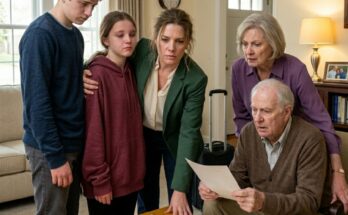
Mr. Alden opened the folder and slid the first document toward me.
“This,” he said, “is the deed to the house.”
I blinked.
“I’m sorry?”
“The house your brother Matthew believes he inherited.”
My mouth went dry.
“But the lawyer said Grandpa left the house to Matthew.”
“He left Matthew the right to live in it for ninety days after the reading of the will,” Mr. Alden said carefully. “But ownership of the house was transferred into a family trust years ago. Your grandfather named you as the trustee and final beneficiary.”
I stared at him, unable to understand.
“That can’t be right.”
“It is.”
“But Matthew…”
“Your brother received what your grandfather legally allowed him to receive without alerting him to the rest of the structure,” Mr. Alden explained. “The house is not his to sell. Not his to borrow against. Not his to use as leverage. In ninety days, you decide what happens next.”
The room seemed to tilt.
For a moment, all I could hear was Matthew’s laugh in the lawyer’s office.
“That’s perfect. There’s her prize.”
I pressed both hands flat against the table.
Grandpa’s house.
The house where he taught me to make soup when I was ten. The house where my school drawings still sat in a box in the attic. The house where I had sat beside him through doctor visits, difficult nights, quiet mornings, and the last soft weeks of his life.
Matthew had smiled because he thought he had won it.
But Grandpa had protected it from him.
Mr. Alden slid another document forward.
“This is an account ledger,” he said. “Your grandfather saved more than your siblings knew.”
I looked down.
The amount written on the page made my breath catch.
It was not millions. It was not some impossible fortune from a movie. But it was more than enough to change my life.
Enough to keep the house safe.
Enough to pay debts.
Enough to breathe.
“How?” I whispered.
“He worked all his life,” Mr. Alden said. “He lived simply. He invested quietly. Your grandmother also left him a small inheritance, and he never spent it carelessly.”
“But the will gave Kirk and Jessica $20,000 each.”
“Yes,” Mr. Alden said. “Those were separate gifts. Your grandfather wanted them to receive something. But the main accounts in this trust were placed under your care.”
I looked at the old lunchbox sitting beside the safe deposit box.
Rusted.
Scratched.
Mocked.
It had carried his lunch every workday for decades.
And somehow, it had carried his final plan too.
“What about Jake and the car?” I asked.
“The car is his,” Mr. Alden said. “Your grandfather wanted him to have it. But there is more you should read before you decide how to handle your siblings.”
He reached for the leather-bound notebook.
When he placed it in front of me, I recognized it immediately.
Grandpa’s work journal.
He had carried it in the inside pocket of his old coat. I had seen him write in it sometimes at night, after everyone else had gone to bed. When I was little, I thought he was writing grocery lists or repair notes.
Mr. Alden did not open it.
“That is yours,” he said. “Your grandfather wanted no one else to read it unless you chose to show them.”
I touched the cover with my fingertips.
The leather was worn soft from years of use.
I opened to the first page.
The handwriting was Grandpa’s.
September 14.
Emily cried again tonight. Matthew told her she was the reason the family broke. She is seven years old. I do not understand how grown children can place such a burden on someone who was still small enough to sleep with a nightlight. I told her the truth, but I fear she does not believe me yet.
I swallowed hard.
The next pages were filled with small pieces of our life.
Emily lost her first tooth.
Emily asked if her mother liked daisies.
Emily made pancakes shaped like clouds.
Emily pretended not to hear Jessica whispering, but I saw her face.
Emily stayed up with me when my chest hurt.
Emily passed her exams.
Emily came home.
Emily stayed.
Page after page, he had written down the things no one else noticed.
Not just the pain.
The little victories too.
He had seen everything.
My tears fell onto the table before I could stop them.
“I didn’t know he wrote about me,” I whispered.
“He spoke about you often,” Mr. Alden said. “Very often.”
I closed the notebook halfway, unable to read more in that moment. My heart felt too full and too bruised at the same time.
Then Mr. Alden opened another envelope.
“This is the part your grandfather wanted handled carefully,” he said.
Inside was a copy of the accident report from the night my parents were gone.
My stomach tightened.
I had never read it.
No one had ever let me.
All my life, the story had been told around me in pieces. My siblings said our parents had gone out because of me. That I had been sick. That I had cried. That they had taken me for a drive. That if I had not existed, they would still be alive.
Grandpa had always told me it wasn’t true.
But he never gave me the details.
Maybe he thought I was too young.
Maybe later, he thought the wound had already been opened too many times.
Mr. Alden’s voice softened.
“Your grandfather believed you needed to see this when you were ready.”
I reached for the report.
My hands trembled so badly I had to press the paper down against the table.
The words blurred at first, but slowly, line by line, the truth came forward.
My parents had not been driving because of me.
They had been driving home from a late appointment with a lawyer.
The appointment had nothing to do with me being sick. Nothing to do with me crying. Nothing to do with my needs as a child.
They had been meeting to sign guardianship and estate papers.
My father had recently discovered that Matthew, who was seventeen at the time, had been taking money from a small account our parents kept for the younger children’s future education.
My parents had planned to change the way the funds were protected.
My mother had brought me with them because the babysitter had canceled, and Grandpa had been working late.
I read the paragraph twice.
Then a third time.
The accident had happened because another driver ran the red light.
That was all.
There was no hidden mistake.
No blame to place on a child.
No reason for my siblings to look at me like I had taken something from them.
Matthew had known.
At least, he must have known enough.
He was seventeen. Not a small child. Old enough to understand why our parents had gone out that night. Old enough to remember the arguments before they left.
My voice came out thin.
“Did Grandpa know Matthew took the money?”
“Yes,” Mr. Alden said. “He found out later. Your parents had already started the process of protecting the remaining assets when the accident happened.”
“Then why did no one tell me?”
“Your grandfather wanted to protect you from more conflict when you were young. Later, I think he hoped your siblings would mature. He gave them many chances.”
A sad smile touched his face.
“Your grandfather believed people could change. But he also believed in preparing for the possibility that they would not.”
I looked down at the report again.
For years, I had apologized for breathing.
For years, I had entered every family dinner like someone already guilty.
I had tried to be quiet. Helpful. Agreeable. Invisible.
When Jessica snapped at me, I said nothing.
When Kirk forgot my birthday, I told myself he was busy.
When Jake asked Grandpa for money and then ignored him for months, I kept my mouth closed.
When Matthew called me “the reminder,” I went upstairs and cried into a towel so Grandpa wouldn’t hear.
All that time, the truth had been waiting.
I was not the reason our family fell apart.
I was the person they chose to blame because blaming a child was easier than facing themselves.
Mr. Alden slid one final document across the table.
“This is a letter your grandfather asked me to deliver to your siblings if they challenge the trust.”
I did not open it.
“What does it say?”
“I have not read the personal portion,” he said. “But legally, it explains that your grandfather documented years of financial requests, unpaid loans, property damage, and attempts to pressure him into changing his estate plans.”
I looked at him.
“Grandpa documented all of that?”
“He documented everything.”
Of course he did.
The old man who wrote down when I lost my first tooth had also written down the day Matthew demanded the house.
The day Jake sold Grandpa’s tools without asking.
The day Kirk borrowed money and never returned it.
The day Jessica told Grandpa he was selfish for refusing to sell the house.
And probably the day I sat beside him after his doctor appointment, holding his hand while he pretended not to be afraid.
Mr. Alden leaned back in his chair.
“Your grandfather did not want you to spend your life fighting them. He wanted you to have enough truth and legal protection to stand firm.”
I sat quietly for a long time.
Outside the small room, life went on. Phones rang softly. A printer hummed somewhere. Someone laughed politely near the front desk.
But inside that room, my whole life had split into before and after.
Before the lunchbox, I was the granddaughter who had been left with nothing.
After the lunchbox, I was the one Grandpa had trusted with everything that mattered.
When I finally left the bank, the sun was lower in the sky. The lunchbox felt heavier in my arms, though nothing inside it had changed.
My phone had seventeen missed calls.
Five from Matthew.
Three from Jessica.
Four from Kirk.
Two from Jake.
And three unknown numbers.
There were messages too.
Matthew: Where did you go?
Jessica: Stop being dramatic.
Kirk: We need to talk about Grandpa’s things.
Jake: Did you take anything from the house?
Matthew again: Call me now.
I looked at the screen and felt something unfamiliar.
Not fear.
Not guilt.
Calm.
I did not call back.
I went home.
Not to my apartment.
To Grandpa’s house.
The house I had cooked in. Cleaned. Protected. Loved.
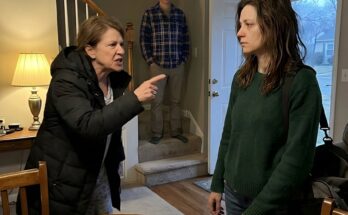
When I pulled into the driveway, Matthew’s truck was already parked out front.
Of course it was.
He stood on the porch with Jessica, Kirk, and Jake. They had apparently gone straight from the lawyer’s office to the house they believed belonged to Matthew.
Jessica had a cardboard box in her hands.
Kirk was carrying Grandpa’s old radio.
Jake was looking through the garage with the door open.
And Matthew stood at the center of it all, holding Grandpa’s house keys like a king holding a crown.
When he saw me, he smirked.
“Look who came back,” he said. “Done crying over your lunchbox?”
I stepped out of the car slowly.
The lunchbox was in my left hand. The folder from the bank was tucked under my right arm.
“What are you doing?” I asked.
Matthew laughed.
“What does it look like? This is my house now. We’re sorting through what’s left.”
My eyes moved to Jessica’s box.
Inside, I saw Grandma’s blue vase, Grandpa’s framed military photo, and the quilt he used to keep folded over his chair.
“Put those back,” I said.
Jessica blinked.
“Excuse me?”
“Put them back.”
Kirk gave a short laugh.
“Emily, don’t start. You got what Grandpa left you.”
“That’s right,” Matthew said. “You got the lunchbox. Be grateful. Some people don’t get anything.”
I looked at him.
For the first time in my life, I did not shrink under his stare.
“You have ninety days,” I said.
Matthew’s smile faded slightly.
“What?”
“You have ninety days before the house transfers fully under my control as trustee and beneficiary. Until then, nothing is to be removed, sold, damaged, or altered without written approval.”
Jessica stared at me.
“What are you talking about?”
I held up the folder.
“Grandpa put the house in a trust.”
Matthew stepped down from the porch.
“No, he didn’t.”
“Yes,” I said. “He did.”
His face hardened.
“The lawyer said the house was mine.”
“The lawyer read what Grandpa wanted you to hear in that room,” I said. “The legal documents say something different.”
Kirk set the radio down on the porch.
Jake came out of the garage, wiping his hands on his jeans.
“What documents?” he asked.
I looked at all four of them.
“The ones Grandpa left in the bank box. The one opened with the key inside the lunchbox.”
Silence.
For one perfect, unbearable second, no one laughed.
Then Matthew’s face changed.
Not to sadness.
Not to regret.
Panic.
“You opened it?” he asked.
I frowned.
“Why wouldn’t I?”
His eyes shifted to Jessica.
It was quick.
Almost nothing.
But I saw it.
In that moment, I understood that Matthew had suspected there might be something in the lunchbox after all.
Maybe Grandpa had hinted once. Maybe Matthew had seen him place something inside. Maybe he had searched for it and never found the key.
Whatever it was, his reaction told me more than his words.
Jessica’s voice sharpened.
“What was in it?”
“A letter,” I said. “A key. A photograph. And the truth.”
Matthew’s jaw tightened.
“Don’t be dramatic.”
I took a step toward the porch.
“I read the accident report.”
His face went still.
The others looked confused.
Jessica frowned. “What accident report?”
“The one about Mom and Dad,” I said. “The one that says they were coming home from a legal appointment. Not driving around because of me. Not out because I cried. Not because I needed anything.”
My voice shook, but I kept going.
“They were signing papers because they found out money had been taken from an account meant for the younger children.”
Jessica looked at Matthew.
Kirk looked down.
Jake’s mouth opened slightly.
Matthew said nothing.
And that silence answered everything.
“You knew,” I whispered.
His eyes flashed.
“I was seventeen.”
“You knew,” I repeated.
“You were too young to understand,” he snapped.
“I was too young to be blamed,” I said.
The words came out stronger than I expected.
Matthew looked away first.
For the first time in my life, he looked away from me.
Jessica lowered the cardboard box slowly onto the porch.
“Matthew?” she said.
He turned on her.
“Don’t.”
But Jessica’s face had gone pale.
“All these years,” she whispered. “You said…”
“I said what everyone was thinking,” Matthew snapped.
“No,” I said. “You said what kept everyone looking at me instead of you.”
His face reddened.
“You think you’re better than us because you stayed with him?”
“No,” I said. “I stayed because I loved him.”
He laughed bitterly.
“You stayed because you had nowhere else to go.”
“Maybe,” I said softly. “At first. But later I stayed because he was my home.”
That quieted him more than shouting could have.
The evening air felt cold, though the sun still touched the roofline. A neighbor’s dog barked somewhere down the street. The world looked ordinary, even as mine rearranged itself piece by piece.
Jake stepped forward.
“What else did Grandpa leave?”
I almost laughed then, not because anything was funny, but because even now, that was his first question.
Not: Are you okay?
Not: What did the report say?
Not: Did we hurt you?
Only: What else?
I looked at him and felt a door close inside me.
“Enough,” I said.
Kirk rubbed a hand over his face.
“Emily, we should talk inside.”
“No,” I said. “You should all leave.”
Matthew stepped closer.
“You can’t throw us out.”
“I’m not throwing you out,” I said. “I’m asking you to leave before this becomes uglier than it already is. The trust gives you ninety days to remove personal belongings that legally belong to you. Not Grandpa’s keepsakes. Not the house contents. Not anything listed in the inventory.”
Jessica stared at the box at her feet as if it had become too heavy to lift.
I turned to her.
“Take your purse. Leave the vase.”
Her eyes filled with tears.
For a moment, I almost softened.
Jessica had been ten when our parents were gone. Old enough to grieve. Too young to know what to do with grief. She had followed Matthew’s version of the truth for years, and maybe believing him had been easier than admitting the world was random and unfair.
But she had grown up.
She had made choices.
So had I.
One by one, they left.
Matthew was last.
He stood at the edge of the driveway, keys still in his hand.
“You think this makes you family?” he said.
I looked at the keys.
Then at his face.
“No,” I said. “Grandpa already did that.”
He threw the keys onto the porch. They landed with a sharp metallic sound.
Then he got into his truck and drove away.
I stood there until the street was quiet.
Only then did I sit down on the porch steps and let myself shake.
Not from fear.
From release.
That night, I walked through Grandpa’s house room by room.
Nothing looked different.
His slippers were still beside his bed. His reading glasses still rested on the table next to his chair. The mug he used every morning still sat upside down on the dish rack because I had washed it the day before his final hospital visit.
But everything felt different.
The house was not empty now.
It was full of him.
His quiet planning.
His stubborn love.
His faith that one day I would open the lunchbox and understand.
I carried the leather notebook to the kitchen and sat where he used to sit.
For hours, I read.
Some pages made me cry.
Some made me smile.
Some made me press the notebook to my chest because I could not believe someone had loved me so carefully.
He had written about the first time I called him “home” by mistake.
Emily came in from school today and shouted, “I’m home,” then looked embarrassed. I pretended not to notice. But I did. I went into the pantry and cried like a fool.
He had written about my graduation.
She looked for her siblings in the crowd. They did not come. I clapped loud enough for all of them.
He had written about the night I moved back in.
She thinks she came home to care for me. Maybe she did. But the truth is, the house has sounded alive again since she brought her books and that ugly yellow teapot.
I laughed through my tears.
I still had that teapot.
It was sitting on the stove.
Near midnight, I found the final entry.
His handwriting was shakier there.
Emily will hurt when she hears the will. I hate that. But she must be allowed to see who laughs when they think she has nothing. It will make the truth easier to accept later. I pray she forgives me for that moment. I pray she knows I never once saw her as a burden. She was the child who kept my heart from closing.
I covered my mouth and cried into the quiet kitchen.
“I know,” I whispered.
The next few weeks were not easy.
Matthew hired a lawyer. Then he stopped calling so often after Mr. Alden’s office sent copies of the trust documents and Grandpa’s records.
Kirk asked if we could “settle like adults,” which meant he wanted money.
Jake wanted the car and “maybe a few tools.”
Jessica sent one long message that began with excuses and ended with, “I don’t know what to believe anymore.”
I did not answer right away.
For once, I allowed myself time.
Grandpa had given me more than documents. He had given me permission to stop rushing to make everyone comfortable.
I changed the locks under legal guidance.
I inventoried the house.
I met with Mr. Alden twice.
I learned that Grandpa had also set aside funds for repairs, taxes, and maintenance. He had thought of things I would not have known to worry about.
In the velvet pouch from the safe deposit box, I found my grandmother’s wedding ring.
Another note was tucked inside.
This belonged to the woman who taught me that love is shown in daily things. Soup. Clean socks. A hand on the back when someone is crying. Keep it, sell it, wear it, hide it in a drawer. It is yours now. Objects only matter when love gives them meaning.
I kept it.
Not on my finger.
On a chain around my neck.
A month after the will reading, Jessica came to the house.
She did not come with boxes.
She came with a casserole dish and red eyes.
I almost didn’t let her in.
When I opened the door, we stood facing each other like strangers.
“I don’t know what to say,” she whispered.
“Then don’t start with an excuse,” I said.
She flinched.
Then nodded.
“I’m sorry.”
The words were small.
Not enough for years.
But they were the first honest words she had given me in a long time.
I stepped aside.
She walked into the house slowly, as if she no longer had the right to move freely there.
We sat at the kitchen table.
Grandpa’s chair was between us.
For a while, neither of us spoke.
Then Jessica began to cry.
“I believed Matthew because it gave me somewhere to put the anger,” she said. “I was ten. I missed Mom so badly I couldn’t breathe. Dad too. And Matthew kept saying it was because of that night, because they had taken you with them, because everything changed after you were born. I know that doesn’t make it right.”
“No,” I said quietly. “It doesn’t.”
She nodded, wiping her face.
“I know.”
I looked at my sister, really looked at her. For years, she had been sharp edges and cold glances. But that day, she looked tired.
Not innocent.
Not forgiven.
Just tired.
“Grandpa tried to tell you,” I said.
“He did,” she whispered. “I didn’t want to hear it.”
That was the closest thing to truth we had ever shared.
I did not forgive her that day.
Forgiveness was not a door I could open just because someone knocked.
But I let her sit.
And when she asked if she could see the accident report, I showed it to her.
She read it in silence.
By the end, her hand was shaking.
“Matthew knew,” she said.
“Yes.”
She pressed her fingers against her mouth.
“I blamed you at Christmas,” she whispered. “I blamed you when you were twelve and you burned the rolls. I blamed you when Grandpa bought you that blue coat. I blamed you for being loved.”
The words hurt, but not in the same way they once would have.
Before, I would have tried to comfort her for feeling guilty.
Now, I let the guilt belong where it belonged.
“Yes,” I said.
She cried harder.
I made tea.
Not because everything was okay.
Because Grandpa had taught me that tea could hold silence when words were too heavy.
Kirk came two weeks later.
His apology was awkward and half-proud, but real enough to begin with.
Jake sent a letter instead of coming in person. It was clumsy, full of crossed-out sentences, and ended with, “I don’t know how to be your brother, but I know I failed at it.”
Matthew did not apologize.
Not then.
Maybe not ever.
He fought until the legal walls Grandpa built proved stronger than his anger. When he realized he could not take the house, he disappeared from the conversation except through short, bitter emails.
For a while, his silence hurt.
Then it became peaceful.
I used some of the trust money to repair the roof before winter. I repainted the kitchen the same soft yellow Grandma had chosen years ago. I kept Grandpa’s chair, but I moved it near the window where the morning light touched it.
The lunchbox stayed on the kitchen shelf.
Not hidden.
Not polished.
Not restored.
I left the rust, the dents, the scratches.
It had earned them.
Sometimes, when the house was quiet, I would take it down and open it. The letter was safely stored now, but I kept a copy inside, along with the photograph and the blue cloth.
The cloth, I eventually realized, was from one of Grandpa’s old work shirts. The same blue shirt he wore in the factory photograph.
It still faintly smelled like cedar and soap.
One afternoon, almost three months after the will reading, I found a final envelope tucked into the lining of the lunchbox.
I had missed it because the bottom panel was slightly loose. When I lifted it, the envelope slid free.
My name was on it again.
Emily.
Inside was one last note.
My dear girl,
If you found this, then you are still looking closely. That is good. Most people miss the quiet things.
I do not know what you chose to do with the house, the money, or your siblings. I trust you.
But I want you to promise me one thing.
Do not spend the rest of your life proving you deserved to be loved.
You already were.
You were loved when you were crying in the back seat and too young to remember. You were loved when I brought you home. You were loved when you failed math and thought the world had ended. You were loved when you stayed beside me and pretended you were not tired.
You were loved before you could earn it.
That is what family should have taught you.
If they did not, let me teach you now.
Live, Emily.
Not quietly.
Not apologetically.
Live fully.
And pack yourself a good lunch once in a while. It matters more than you think.
Grandpa.
I laughed and cried at the same time.
Then I did something I had not done in years.
I packed lunch.
Two sandwiches. Apple slices. A small piece of cake from the bakery down the street. I placed them in Grandpa’s old metal lunchbox and took it to the park.
The same park where I had opened it with shaking hands.
The same bench.
But I was not the same woman.
I sat there under the trees, the lunchbox beside me, and watched families pass by. A little boy chased pigeons. An older couple held hands. A young mother pushed a stroller while talking softly into her phone.
Life kept moving.
For so long, I had thought healing would feel like a grand moment. Like someone finally saying the right words. Like every wound closing at once.
But healing felt quieter than that.
It felt like eating a sandwich in the sun.
It felt like breathing without guilt.
It felt like understanding that being left the lunchbox had never been an insult.
It had been Grandpa’s final lesson.
My siblings had received things they could count.
A house they thought was theirs.
A car.
Money.
But Grandpa had left me the thing they never valued.
The proof of his love.
The truth about my life.
The key to my future.
And the reminder that sometimes the greatest inheritance does not look valuable to people who never understood love in the first place.
Six months later, I turned part of Grandpa’s house into a small community reading room on weekends.
Nothing fancy.
Just shelves, donated books, tea, coffee, and a big wooden table where neighbors could sit. Children came after school. Older people came for company. Sometimes Jessica came too, helping organize books in careful silence.
We were not magically fixed.
But we were honest.
And honest was more than we had ever been.
One Saturday morning, a little girl pointed to the metal lunchbox on the shelf and asked, “What’s that?”
I smiled.
“That,” I said, “is the most important thing my grandfather ever gave me.”
She frowned.
“But it’s old.”
“Yes,” I said, touching the dented lid gently. “The best things usually have a few marks on them.”
She seemed to consider that.
Then she asked, “What was inside?”
I looked around the room.
At the books.
At the sunlight.
At Jessica laughing softly with a neighbor.
At Grandpa’s chair by the window.
Then I looked back at the lunchbox.
“Love,” I said. “And the truth.”
The little girl made a face.
“That sounds boring.”
I laughed.
“I thought so too once.”
But I knew better now.
Because the day my siblings laughed at me, they thought I had been left with nothing.
They did not know Grandpa had placed my whole life back into my hands.
They did not know he had hidden my freedom inside an old metal lunchbox.
And they never understood that when I opened it, my hands shook not because I had lost everything.
But because, for the first time, I was finally holding the truth.