The day my ex-husband was buried with full military honors, everyone expected his pregnant mistress to receive the folded flag.
She stood beside his casket crying for cameras while his parents pretended our three children did not exist.
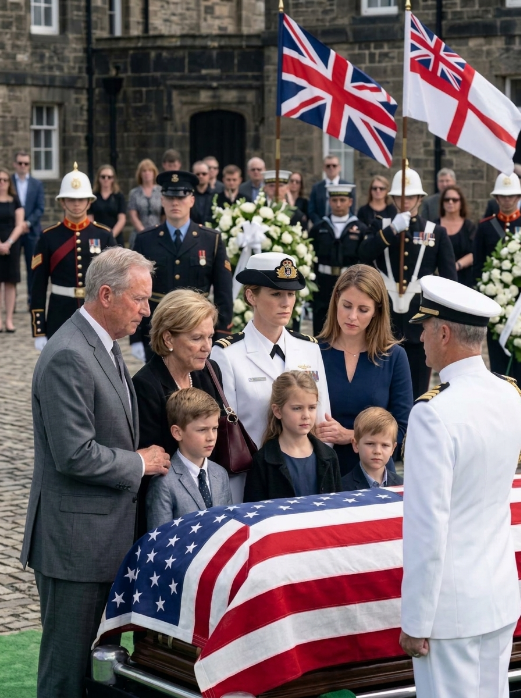
I stayed in the back row.
I had not come for Caleb’s family.
I had come because Liam, Grace, and Owen deserved to decide for themselves what their father’s death meant.
My name is Captain Katherine Hunt.
I’m a military intelligence officer.
A mother.
And seven years before that funeral, I became something else.
Abandoned.
Caleb O’Connor left when our triplets were premature newborns.
He looked at me across our kitchen table one evening and said:
“I can’t do this anymore.”
I remember waiting for the rest of the sentence.
It never came.
He left with Monica Reeves soon afterward.
His family supported him.
His mother, Diane, told me I had chosen my military career over being a good wife.
She said that while three infant carriers sat beside my legs.
I stopped arguing after that.
I rebuilt my life instead.
The first years were brutal.
Three babies meant three feeding schedules.
Three sets of medical appointments.
Three children waking at different hours.
I learned how to sleep in pieces.
How to answer work emails while warming bottles.
How to keep moving when exhaustion stopped feeling temporary.
Caleb rarely called.
Birthdays were inconsistent.
Christmas gifts sometimes arrived late with someone else’s handwriting on the cards.
Eventually, Liam stopped asking when Dad was coming.
Grace stopped drawing him in family pictures.
Owen remembered him mostly through photographs.
That hurt.
But I never taught them to hate him.
I only refused to lie.
Their father loved them in whatever incomplete way he was capable of.
But love without presence can still leave damage behind.
I continued serving.
Eventually, I earned Captain.
Our life became stable.
Not easy.
Stable.
Then last Tuesday, everything changed.
A news alert appeared:
FORMER OFFICER CALEB O’CONNOR KILLED DURING CLASSIFIED COMBAT MISSION
I read the headline repeatedly.
Caleb had left active military service years earlier.
I knew he had done contract work afterward, but nothing that explained a classified combat mission.
Before I could investigate, Diane texted.
We’re burying our son at Arlington on Friday. Do not bring your children. Monica is the only widow people need to see.
I stared at the message.
Seven years.
Not one birthday party attended by his parents.
Not one emergency-room visit.
Not one school concert.
Now they wanted to erase his children from his funeral too.
No.
I did not answer Diane.
Friday morning, I dressed the triplets carefully.
Liam wore a small gray suit.
Grace wore navy.
Owen asked whether he had to cry.
“No.”
“What if I don’t feel sad?”
“You don’t have to perform anything.”
“What if I am sad?”
“Then you can be sad.”
Grace asked:
“Was Dad a hero?”
I hesitated.
“He was your father.”
“That’s not the same thing.”
She was seven.
Sometimes children find the exact center of something adults spend years avoiding.
“No,” I admitted. “It isn’t.”
At Arlington, Diane saw us immediately.
Her expression hardened.
She approached before the service.
“I told you not to bring them.”
“They’re his children.”
“Monica is pregnant. She doesn’t need additional stress.”
I looked at her.
“My children have existed for seven years, Diane. They are not additional stress.”
She lowered her voice.
“This ceremony is being covered by the press. Please do not create a scene.”
“I’m standing in the back row.”
“Then stay there.”
I did.
At the front, Monica rested one hand on her pregnant stomach.
She wore a black coat that looked tailored for cameras.
She had referred to herself publicly as Caleb’s widow since news of his death broke.
No one seemed interested in correcting her.
Then the military SUV arrived.
Four-star General Nathan Cole stepped out.
In his hands was a folded American flag.
Diane leaned toward Monica.
“Go, sweetheart. That’s yours.”
Monica stood.
“Thank you, General.”
Cole walked past her.
At first, she smiled as though he had not noticed her.
Then confusion spread across her face.
He walked past Diane.
Past Michael O’Connor.
Past the front row.
Straight toward me.
The cemetery fell silent.
He stopped.
“Captain Hunt.”
I saluted.
“Sir.”
He returned it.
Then he said:
“I am not here to present a hero’s flag to a grieving widow.”
The words moved through the cemetery like electricity.
Monica took a step backward.
Diane stood.
“What does that mean?”
The general opened a sealed folder.
“There is a Department of Defense briefing concerning former officer Caleb O’Connor. Portions were authorized for public disclosure this morning.”
Then he looked toward my children.
“First, Ms. Monica Reeves was never Mr. O’Connor’s lawful spouse.”
Monica’s face drained.
“That’s irrelevant.”
“No.”
The general’s voice remained controlled.
“It is directly relevant to the presentation of military honors.”
He turned toward me.
“Caleb O’Connor’s legally recognized surviving children are Liam Hunt-O’Connor, Grace Hunt-O’Connor, and Owen Hunt-O’Connor.”
Grace squeezed my fingers.
“The flag belongs to them.”
Diane made a sound behind him.
“No. Caleb wanted Monica.”
General Cole looked toward her.
“Mrs. O’Connor, your son’s signed casualty and beneficiary documents say otherwise.”
Then he added:
“And there is substantially more.”
That was when the funeral stopped being only a funeral.
Eighteen months before his death, Caleb had become a cooperating witness in a counterintelligence investigation involving O’Connor Strategic Logistics.
His parents’ company.
A company that had spent years receiving defense subcontracting work.
The investigation began with irregular invoices.
Shell vendors.
Equipment that existed on paper but not in warehouses.
Payments routed through companies with foreign intermediaries.
Caleb discovered it by accident.
Monica had asked him to approve documents related to one of the vendors.
He signed once.
Then noticed the company address belonged to an empty office.
He began looking.
And what he found frightened him enough to contact federal investigators.
General Cole looked at me.
“Captain Hunt, there is something you deserve to hear directly.”
I waited.
“Mr. O’Connor’s departure from your marriage was not part of this operation.”
For one second, I felt ridiculous for the relief that came with those words.
There was no secret mission seven years ago.
No noble explanation.
“He left voluntarily,” Cole continued. “His misconduct toward you and your children was personal.”
I nodded.
“Thank you.”
That was all.
Because I did not need Caleb transformed into a secret saint.
I needed the truth.
Then the general said:
“He understood that too.”
A military aide produced an encrypted recording.
Caleb’s voice filled the cemetery.
“Katherine, if you hear this, I’m already gone.”
My children stared toward the speaker.
“I am not asking for forgiveness.”
His voice cracked.
“Leaving you was not duty. It was cowardice.”
I closed my eyes.
“I abandoned you with three babies because responsibility frightened me. Then I let my parents tell me you were the problem because that made living with myself easier.”
Diane whispered:
“Caleb…”
The recording continued.
“What I did later does not erase what I did to you.”
Then he explained the investigation.
His parents had been using defense contracts to divert money through false vendors.
Monica had helped manage portions of the financial network.
Caleb initially benefited from the lifestyle.
Then discovered that some transferred project information involved restricted logistics data.
At that point, it stopped being simple financial fraud.
He contacted investigators.
For eighteen months, he cooperated.
Because I worked in military intelligence, the investigation was compartmented from me.
No one wanted even the appearance that I had access through a personal connection.
Caleb’s final mission involved recovering an encrypted ledger from a foreign intermediary before the evidence could disappear.
The extraction was attacked.
Caleb died before the team returned.
But the ledger survived.
Then his recording turned personal again.
“My children are my legal next of kin.”
Diane began crying.
“Anything I still own goes to them. Katherine owes me nothing. She already gave them the years I refused to give.”
Liam looked at me.
I could not speak.
“If my parents or Monica attend my funeral pretending they knew nothing, they are lying.”
The recording ended.
General Cole closed the device.
Then he opened the report.
“Caleb’s final statement identified three participants in the financial operation.”
He read the names.
Diane O’Connor.
Michael O’Connor.
Monica Reeves.
Three investigators stepped forward.
The solemn funeral erupted.
Diane shouted.
Michael demanded an attorney.
Monica accused Caleb of lying.
Then she accused me.
“You did this!”
I stared at her.
“I didn’t even know about it.”
An investigator produced the warrants.
They were detained for questioning and processing connected to the federal case.
Then General Cole raised one hand.
“There is one additional matter concerning Ms. Reeves.”
Monica turned.
The general looked toward her pregnancy.
“Mr. O’Connor requested legal verification of the unborn child’s paternity before any claim against his estate was accepted.”
And for the first time that day, Monica looked more frightened by that sentence than by the investigators surrounding her.
FULL STORY — PAGE 2
The funeral ended differently from how anyone expected.
There was still a rifle salute.
Still taps.
Still the careful folding of the flag.
Military ceremony does not change because the deceased was complicated.
Maybe that was the strangest part.
Honor was rendered to service.
Truth remained separate.
General Cole walked toward my children with the folded flag.
He knelt so he was closer to their height.
“Liam. Grace. Owen.”
They looked at him.
“This belonged to your father’s service.”
Grace asked:
“Was he good?”
The question caught everyone around us off guard.
General Cole did not lie.
“He made serious mistakes.”
She waited.
“He also made one important choice at the end.”
“What?”
“He told the truth when telling it became dangerous.”
Grace looked toward the flag.
Then at me.
“Does that make everything okay?”
“No,” I said quietly.
General Cole nodded.
“No. It doesn’t.”
That answer mattered.
He handed the flag to me because the children were minors.
I accepted it on their behalf.
Not as Caleb’s widow.
Not as the wife he left.
As the mother of his children.
Monica was escorted away from the cemetery grounds with federal investigators.
Diane screamed that the entire thing was a conspiracy.
Michael said almost nothing.
The press followed them.
I stayed beside the casket.
The cameras eventually left.
Rain continued falling.
Liam stared toward the grave.
“Mom?”
“Yes?”
“Did Dad know we loved him?”
My chest tightened.
“You did love him.”
“But did he know?”
“I think he did.”
Owen looked confused.
“I don’t remember him enough.”
I crouched beside him.
“You don’t have to remember someone more than you do.”
He nodded.
Then asked:
“Can we go home?”
“Yes.”
That was how Caleb’s funeral ended for us.
Not with a dramatic victory.
With three tired children asking for lunch.
The investigation became public within days.
The headlines were brutal.
O’Connor Strategic Logistics had received large defense subcontracts over nearly a decade.
Federal investigators alleged that Diane and Michael had approved inflated invoices through shell vendors.
Some vendors supplied legitimate services.
Others barely existed.
Money was moved.
Records were altered.
Internal audits were obstructed.
Monica had worked informally between several accounts despite publicly presenting herself as someone uninvolved in the business.
The encrypted ledger Caleb died recovering connected the transactions.
But Caleb’s role was complicated too.
He had signed documents during the early years.
He had benefited from money connected to the family company.
He only became a cooperating witness after discovering how far the operation went.
General Cole called me a week after the funeral.
“I want you to know the department will not present him as something he wasn’t.”
“Thank you.”
“He assisted the investigation significantly.”
“I understand.”
“He also made mistakes.”
“I know.”
There was a pause.
“Your children may eventually see stories calling him a hero.”
I looked toward the living room.
The triplets were building something with blocks.
“I’ll tell them what actually happened.”
“That’s probably the best thing you can do.”
The estate process came next.
Caleb had changed his beneficiary designations eighteen months earlier.
Anything legally his was divided into a trust for Liam, Grace, and Owen.
I was appointed custodian until they reached adulthood.
The amount was significant but nowhere near the fantasy Diane had circulated publicly.
Caleb had also left three handwritten letters.
One for each child.
I did not open them.
My attorney looked surprised.
“You’re allowed to review them as guardian.”
“I know.”
“You don’t want to know what they say?”
“Of course I do.”
“Then why wait?”
“Because they’re his words to them.”
The children were seven.
I placed the letters in a safe-deposit box.
“When they are old enough to decide whether they want them, they can choose.”
That was something Caleb had denied me years earlier.
Choice.
I would not deny it to them.
Monica’s pregnancy created another legal issue.
Her lawyer initially insisted Caleb was the father.
If true, the baby could have had legitimate inheritance rights depending on the final determination.
I had no desire to fight a child.
None.
I told my attorney:
“If the baby is Caleb’s, that child is not responsible for anything Monica did.”
The paternity process continued after the baby was born.
Six months after the funeral, the result came back.
Caleb was not the father.
I read the report once.
Then put it down.
My attorney waited.
“Do you want to know who is?”
“No.”
“Katherine—”
“It changes nothing important for me.”
Monica had built her public identity around being the pregnant widow of a fallen officer.
Both parts had now collapsed.
She had never been Caleb’s legal wife.
And the child was not his.
But the baby was innocent.
I refused every interview request about it.
The criminal case lasted much longer.
Diane and Michael denied knowingly participating in illegal activity.
They blamed accountants.
Consultants.
Caleb.
Each other.
Monica eventually negotiated cooperation through her attorneys.
She turned over messages, account information, and communications involving shell vendors.
Months of court proceedings followed.
No dramatic overnight punishment.
Just documents.
Hearings.
Forensic accounting.
Testimony.
Eventually, guilty pleas and convictions resolved major parts of the case.
Michael received a lengthy federal sentence tied to the financial scheme and restricted-data conspiracy.
Diane received a substantial sentence for her role in fraudulent transfers and obstruction.
Monica received a reduced sentence after cooperating, along with restitution obligations related to the financial offenses.
I attended only one hearing.
Not because I wanted revenge.
Because Caleb’s final statement became part of the case.
Diane saw me in the hallway.
She looked older.
Smaller.
But her anger survived.
“You destroyed my family.”
I stopped.
Seven years earlier, that sentence might have broken me.
Now it sounded almost absurd.
“I didn’t know the investigation existed.”
“You brought those children to the funeral.”
“They were Caleb’s children.”
“You knew exactly what you were doing.”
“No.”
I looked directly at her.
“You knew exactly what you were doing when you told me not to bring them.”
She had no answer.
Then she said:
“Caleb loved Monica.”
“Maybe he did.”
That surprised her.
I continued.
“Loving Monica does not erase Liam, Grace, and Owen.”
Diane looked away.
“You always thought you were better than us.”
“No.”
I shook my head.
“I spent years thinking I wasn’t good enough for you.”
Then I walked away.
That was the last conversation we ever had.
FULL STORY — PAGE 3
Two years passed.
The triplets turned nine.
Life became ordinary again.
That was the greatest gift.
School mornings.
Soccer practice.
Grace refusing to eat eggs unless they were scrambled exactly the right way.
Liam developing an obsession with military aircraft.
Owen deciding he wanted to become a veterinarian because “animals don’t have divorce.”
I did not know whether to laugh or cry at that one.
The folded flag remained in a triangular display case in my office.
Not in the living room.
Not as a shrine.
It belonged to the children.
They could decide where it belonged when they were older.
The money Caleb left them stayed invested.
I did not use it to upgrade our house.
I did not buy new cars.
It was theirs.
Education.
First homes.
Whatever responsible purpose made sense when they reached adulthood.
My life had already been built without Caleb’s money.
I intended to keep it that way.
Then one Sunday afternoon, Grace walked into my office and stared at the flag.
“Mom?”
“Yes?”
“Can we go see Dad?”
I knew immediately what she meant.
Arlington.
“Today?”
She nodded.
Liam and Owen wanted to come too.
So we drove.
The cemetery looked different in sunlight.
No cameras.
No investigators.
No shouting.
Just white stones stretching across green grass.
We found Caleb’s grave.
The children stood quietly.
Then Owen asked:
“Did Dad die because he was trying to fix what he did?”
I thought carefully.
“Some of it.”
“What does that mean?”
“He helped stop something wrong.”
Liam looked at the grave.
“Does that mean he fixed what he did to us?”
“No.”
Three faces turned toward me.
I continued.
“Those are different things.”
Grace frowned.
“But people say he died a hero.”
“People like simple stories.”
“Was he?”
I sat on the grass.
The children sat beside me.
“Your father was brave at the end.”
They listened.
“He helped investigators when doing so became dangerous. He made sure evidence reached the right people.”
I paused.
“But he also left you when you needed him.”
Liam looked down.
“So he was bad and good?”
“Most people are more complicated than one word.”
Owen considered that.
“Do we have to forgive him?”
“No.”
Grace asked:
“Can we?”
“Yes.”
“What if I don’t know?”
I smiled.
“Then you don’t know.”
That seemed to satisfy her.
We sat there for a while.
Then Liam pulled something from his backpack.
One of Caleb’s letters.
My heart stopped.
“How did you get that?”
“I asked Mr. Samuel at the bank.”
My attorney.
Of course he had called me first.
I had approved releasing the letters after the children began asking more questions.
Liam held his.
Grace and Owen had theirs too.
“Do you want me here when you read them?”
Grace nodded.
Owen nodded.
Liam said:
“I want to read mine myself.”
“Okay.”
They opened the envelopes.
I turned away slightly.
Not because I did not care.
Because those words belonged to them.
Grace started crying first.
Then Owen.
Liam remained silent for a long time.
Eventually he handed me his letter.
“You can read it.”
I looked at him.
“Are you sure?”
“Yes.”
Caleb’s handwriting was uneven.
Liam,
I do not know how old you will be when you read this. I hope old enough to know that adults sometimes fail children in ways children never caused.
I stopped.
Liam whispered:
“Keep going.”
I left because I was afraid of responsibility, not because you were difficult to love.
My throat tightened.
Your mother stayed when I left. When you want to understand what courage looks like, look at the person who raised the three of you while I was absent.
I covered my mouth.
Grace leaned against me.
The letter continued.
I cannot give back the years I missed. I cannot ask you to forgive me. I can only tell you the truth and leave the choice to you.
At the bottom:
I was proud to be your father even when I did not behave like one. I am sorry those two things were ever different.
I folded the letter.
Liam looked toward Caleb’s stone.
“I think I forgive him a little.”
I touched his shoulder.
“That belongs to you.”
Grace said:
“I’m still mad.”
“That belongs to you too.”
Owen shrugged.
“I mostly wish he had come to my birthday.”
That one hurt most.
“I know.”
We left flowers.
Then went for burgers.
Because children can move from grief to french fries faster than adults understand.
Years later, I would think often about that funeral.
The cameras.
Monica’s hand on her stomach.
Diane whispering that the flag belonged to her.
General Cole walking past them.
The silence when he stopped in front of me.
At first, I believed the most important moment was when everyone learned the truth about Caleb’s family.
It wasn’t.
It was when the general gave the flag to my children.
Not because the flag represented money.
Not because it proved Monica wrong.
Not because it humiliated Diane.
It mattered because for seven years, Caleb’s family had behaved as though Liam, Grace, and Owen were inconvenient evidence of a life they wanted erased.
The flag said something different.
You existed.
You mattered.
You were his children whether his family acknowledged you or not.
Eventually, I was promoted again.
Major Katherine Hunt.
The children thought that was hilarious because they believed “Captain Mom” sounded better.
I agreed.
We moved once.
Not because of the estate.
Because my assignment changed.
The flag moved with us.
So did Caleb’s letters.
And so did the photograph from the funeral.
Not the one of Monica beside the casket.
Not the one of the arrests.
The photograph I kept showed General Cole kneeling in front of three seven-year-old children while I stood behind them.
No triumph.
No revenge.
Just recognition.
Years after Caleb died, a reporter contacted me asking whether I believed he had redeemed himself.
I declined the interview.
But the question stayed with me.
Did he?
I still do not know.
Maybe redemption is not something the person who caused the damage gets to declare.
Maybe it belongs partly to the people left behind.
Caleb did not earn seven years back by dying bravely.
He did not become a perfect father because he exposed a criminal operation.
He did not erase the night he left three premature babies behind.
But at the end, he stopped lying.
He stopped protecting people who were doing wrong simply because they were family.
And he made sure his children were finally acknowledged.
That mattered.
It just did not erase everything else.
One evening, years after the funeral, I found Grace standing in my office.
She was staring at the flag.
She was older now.
Tall enough that I no longer had to bend down to look into her eyes.
“Mom?”
“Yes?”
“Grandma Diane told everyone Monica was the widow.”
“I remember.”
“But you were Dad’s wife first.”
“Yes.”
“Did it hurt when the general walked toward you?”
I smiled faintly.
“I thought he was about to tell me something terrible.”
“What did you feel when he gave you the flag?”
I looked at the display case.
Then toward her.
“Relief.”
“Because you won?”
“No.”
I shook my head.
“There was nothing to win.”
She waited.
“Because for once, nobody could pretend you three did not belong.”
Grace became quiet.
Then she hugged me.
And suddenly I understood the funeral more clearly than I had on the day it happened.
I had spent years believing the great injustice was that Caleb chose another woman.
It wasn’t.
People can leave marriages.
Love can end.
Relationships fail.
The unforgivable part was allowing three children to believe that someone else’s new life made their existence less important.
That was the wound I had spent seven years trying to repair.
And that was why I had taken them to the funeral despite Diane’s warning.
They deserved to stand where the truth could see them.
Caleb’s final act did not give them a father back.
Nothing could.
But it gave them something his family had spent years trying to take away.
Their place in his story.
The day began with Monica expecting the flag.
It ended with investigators leading her away while my three children held the only military honor that truly belonged to Caleb’s next of kin.
But the real victory came much later.
It came when Liam stopped asking whether his father left because of him.
When Owen stopped thinking forgotten birthdays meant he was forgettable.
When Grace finally understood that being replaced in someone else’s life did not make her replaceable.
That was the inheritance Caleb could never put in a trust.
And it was the one I had spent years building for them.
The knowledge that another person’s failure to love you properly never determines your worth.
Not a husband.
Not grandparents.
Not a father.
No one.
That gray morning at Arlington, General Cole walked past the woman everyone expected him to honor.
Then he walked past the parents who had spent years rewriting their son’s story.
And he stopped in front of the people they had placed in the back row.
My children.
Me.
The family Caleb had abandoned.
The family his parents tried to erase.
The family that survived anyway.
And when the general placed that folded flag into my hands, I finally understood something.
We had never needed Caleb’s family to give us a place in the front row.
We had already built a life where we belonged.
The End.
- I Walked Out of the Hospital Holding My Daughter’s Ashes—Then One Call Exposed Everything My Husband’s Family Had Done
 I walked out of the hospital clutching my daughter’s ashes when my husband called and told me to stop bothering him because her treatment had already been paid. My daughter …
 - The General Walked Past My Ex-Husband’s Pregnant Mistress—Then Stopped in Front of Me
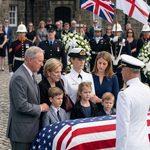 The day my ex-husband was buried with full military honors, everyone expected his pregnant mistress to receive the folded flag. She stood beside his casket crying for cameras while his …
 - The Blue Passbook Held a Secret My Father Buried With Grandma. The Truth Inside It Destroyed Everything I Thought I Knew.
 My father threw my grandmother’s savings passbook into her grave and called it worthless. The next morning, I carried that same muddy blue book into the bank. The teller turned …
 - My Daughter’s 3:17 P.M. Call Sent Me Racing Home—What Police Found in Our Garage Exposed a Family Betrayal
 PART 1 / 3 THE CALL AT 3:17 P.M. “Mom… please help. Come home right now.” My ten-year-old daughter’s voice trembled through the phone. I rushed home and found Chloe …
 - My Sister Saw My House—Then Exposed Her $100,000 Wedding Secret
 My parents handed my sister a $100,000 wedding check at the family dinner table. Then my mother looked directly at me. “And before you get any ideas, Hannah, you won’t …