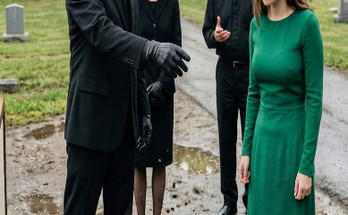
I walked out of the hospital clutching my daughter’s ashes when my husband called and told me to stop bothering him because her treatment had already been paid.

My daughter had been dead for three days.
He did not know.
Or perhaps the more painful truth was that he had not cared enough to know.
My name is Genevieve Sterling Vance.
Hazel was three years old.
She had been born with a severe congenital heart defect.
From the beginning, her life revolved around pediatric cardiologists, prescription formula, medication, medical monitors, hospital stays, and endless uncertainty.
She was tiny.
Even at three, she weighed so little that holding her sometimes felt like holding a bird.
Then came the final crisis.
Her cardiologist ordered an imported medication urgently needed to stabilize her failing heart.
I submitted every document through the Vance family financial system.
Prescription.
Diagnosis.
Hospital invoice.
Emergency authorization.
The response appeared hours later.
EXCEEDS QUARTERLY DEPENDENT ALLOWANCE.
I called my husband Julian seventeen times.
He never answered.
I went to his office.
Waited five hours.
When he finally came downstairs, Victoria Hayes—the woman he had been seeing—was on his arm.
“Don’t ever embarrass me at my workplace again,” he said.
“Hazel needs medication.”
“If you have money problems, handle them with Ximena.”
A doctor eventually paid for one dose himself.
It bought Hazel several more days.
Nothing more.
I resubmitted the request.
UNDER REVIEW.
Seven days later, my daughter died.
Three days after that, I carried her ashes home.
At the Vance estate, Victoria looked toward the urn.
“What is that?”
“Your niece.”
She laughed.
I told her:
“Hazel’s ashes.”
She stopped laughing.
Hazel’s crib sat in a small room in the back wing because Julian had complained that her monitors ruined the atmosphere of the main house.
I placed the urn inside it.
Then I heard voices downstairs.
Julian.
Victoria.
“Ximena did the right thing putting the brakes on her,” Julian said.
“Genevieve thinks she can blow through family money whenever she wants.”
That was when I finally understood something.
The Vance family did not see Hazel’s healthcare as healthcare.
They saw it as an expense.
I opened my closet.
Hidden behind old clothes was a phone my father had given me on my wedding day.
Harrison Sterling had been a powerful private investor.
He had never trusted Julian.
But he respected my choice to marry him.
Before I left my old life, Dad gave me that phone.
“If you ever realize you need your own name back,” he told me, “call Raymond.”
I had never used it.
Until Hazel died.
“Raymond?”
Silence.
Then:
“Genevieve. I have been waiting three years.”
I looked toward my daughter’s urn.
“Execute everything Dad prepared.”
“All of it?”
“All of it.”
“Are you certain?”
“Yes.”
I swallowed.
“Don’t protect any of them.”
Julian’s footsteps approached.
I ended the call.
He entered the room.
“What is that?”
“Your daughter.”
He frowned.
“Hazel died three days ago.”
The words seemed to hit him physically.
“No.”
“Her treatment was delayed because the hospital never received the money.”
“No.”
“I called you seventeen times.”
He stared at the urn.
“Ximena said it was a routine appointment.”
I placed the divorce petition on the bed.
“Then keep believing her.”
I packed Hazel’s blanket.
Her stuffed bunny.
The hospital card containing her tiny footprint.
Then I carried the urn out.
Julian followed.
“Where are you going?”
“Away from you.”
“You have no job.”
I kept walking.
“No income.”
I reached the stairs.
“You have no idea how the real world works without this family.”
That finally stopped me.
I turned.
“You’re right, Julian.”
His expression shifted.
“You have absolutely no idea who you married.”
Then I left.
The next morning, attorney Daniel Mercer arrived at my old downtown apartment.
He carried a leather folder bearing the crest of the Sterling Trust.
My father had died two years earlier.
Unknown to Julian, before his death he had reorganized our family holdings so that my voluntary withdrawal from management could be reversed whenever I chose.
My full voting authority was restored.
My controlling interest reactivated.
My executive position at Sterling Capital became mine again.
Daniel placed a flash drive on the table.
“Your father also ordered continuous due diligence on the Vance family’s business interests.”
“Why?”
“He believed eventually they would seek Sterling financing.”
He was right.
Vance Global Enterprises was negotiating a major merger.
The private-equity group funding most of the transaction sat beneath a Sterling-controlled investment structure.
Julian had spent months begging anonymous investment committees to approve a deal.
He never knew his wife ultimately controlled the capital.
I opened the audit file.
Shell companies.
Internal transfers.
Unrecorded liabilities.
Questionable vendor arrangements.
Then Daniel said:
“There is one other area you need to review.”
“What?”
“Your daughter’s medical claims.”
My body went cold.
Three days later, I returned publicly to the financial world.
At a major Chicago investment summit, the host announced:
“Please welcome Managing Director Genevieve Sterling.”
I walked onto the stage.
Julian sat in the first row.
His expression was unforgettable.
During the break, he cornered me.
“Who is backing you?”
“No one.”
“Sterling Capital came out of nowhere.”
“It did not.”
I looked directly at him.
“You simply never bothered to learn who your wife was before you confined her to the back of your house.”
His jaw tightened.
“Keep my business out of our divorce.”
“I am not going to attack your company.”
He looked almost relieved.
Then I added:
“I am simply going to stop protecting it.”
A complete forensic review began.
I ordered no special punishment.
No altered numbers.
No manufactured crisis.
Only one instruction.
Apply every rule exactly as written.
Forty-eight hours later, serious irregularities appeared.
But the document that stopped me was Hazel’s medical ledger.
Seven transfers.
Every one marked:
APPROVED BY JULIAN VANCE.
Yet the hospital had received nothing.
Every transfer passed through the same administrative channel.
Ximena.