Part 1 of 6
After enduring years of cruel treatment from my in-laws, I finally asked for a divorce.
My father-in-law laughed in my face.
“You were never good enough to be a wife,” he said.
My mother-in-law added, without even lifting her eyes from her magazine, “Good riddance. We are better off without you.”
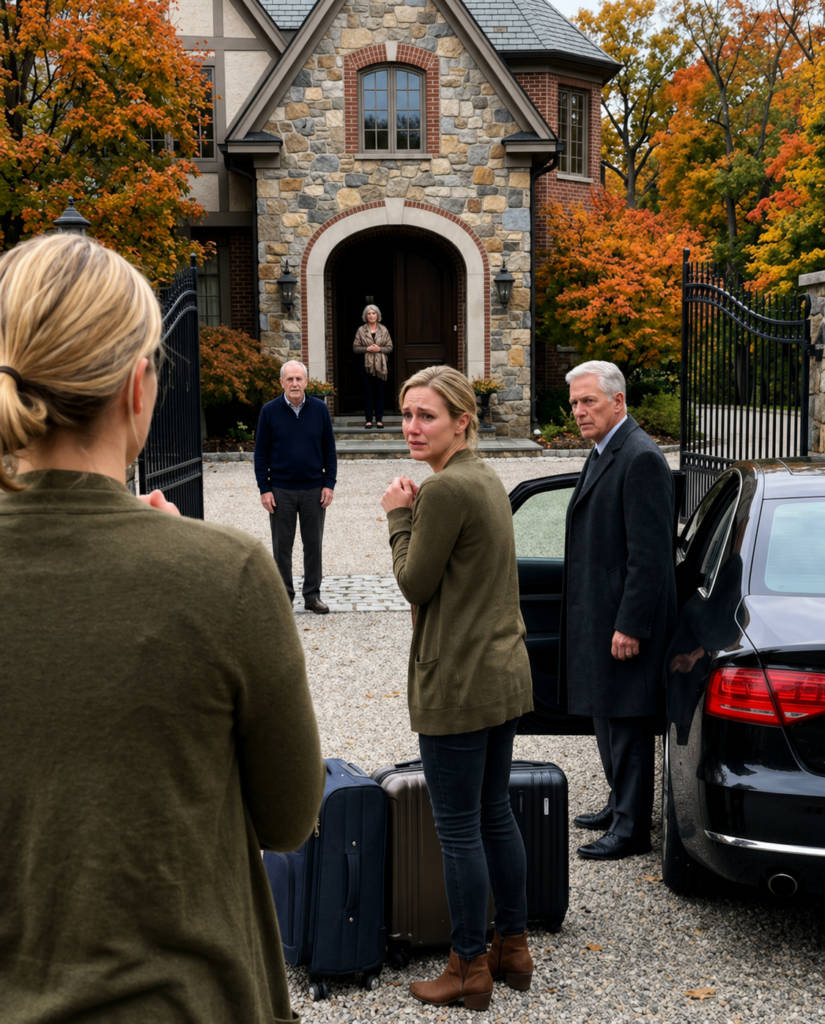
Less than an hour later, a black luxury sedan rolled through their gates to pick me up. The second my father-in-law saw the emblem on the door, his whole body started shaking.
I will never forget that change in him.
Richard Whitmore was not a man who trembled.
He was the kind of man who made other people nervous.
He filled rooms with certainty and used money like a weapon polished so often it gleamed.
For three years, I had watched him belittle caterers, waiters, assistants, delivery drivers, and eventually me, always with the same expression: bored confidence, as if cruelty was simply good taste spoken aloud.
Then he saw that car.
His fingers locked around the doorway.
His face went pale.
The scotch glass in his hand tilted just enough to spill onto the Persian rug near his loafers, and he did not even notice.
That was when I knew whatever was stepping out of the back seat mattered more to him than pride.
Three years earlier, when I married Andrew Whitmore, I thought I understood what I was stepping into.
He had grown up in a wealthy family outside Boston, the kind whose name opened doors before anyone had to knock.
His parents lived in an estate with stone columns and black iron gates. Andrew had been raised to speak in measured tones, shake the right hands, and never show a problem where outsiders could see it.
I was not from that world.
My father had taught history in a public high school for thirty-two years.
My mother was a nurse who knew exactly how to survive on too little sleep and too little appreciation.
We did not have inherited silver, family lawyers, or summers on the Cape.
We had practical shoes, overtime, and the kind of love that showed up when pipes burst or people got sick.
Andrew used to tell me that was what he loved about me.
He said I was the first person who ever made him feel like he did not have to perform.
We met at a charity planning meeting in Cambridge, where I was coordinating a literacy fundraiser and he had appeared because his firm wanted the publicity of a sponsorship.
He stayed after the meeting ended.
We talked over stale coffee and folding chairs.
He laughed easily then.
For a while, I believed the version of him I met was the real one.
The change began so gradually that I doubted myself at first.
His mother, Evelyn, would make small comments about my clothes being a little plain, my voice being too direct, or my family being nice in the earnest way people say when they really mean ordinary.
Richard would refer to nonprofit work as a charming hobby for people who could not survive in the private sector.
Andrew would squeeze my hand under the table later and say, “You know how they are.”
Then he stopped squeezing my hand.
When I asked if we could get our own place, he always had a reason to delay.
His father needed him in the business.
His mother was dealing with stress.
The market was uncertain.
We would be wasting money renting when there was already plenty of space in the family house.
After enough conversations that ended nowhere, staying became the path of least resistance.
That was how I slowly disappeared inside that house: not in one dramatic collapse, but in a thousand small concessions.
Part 1 of 6