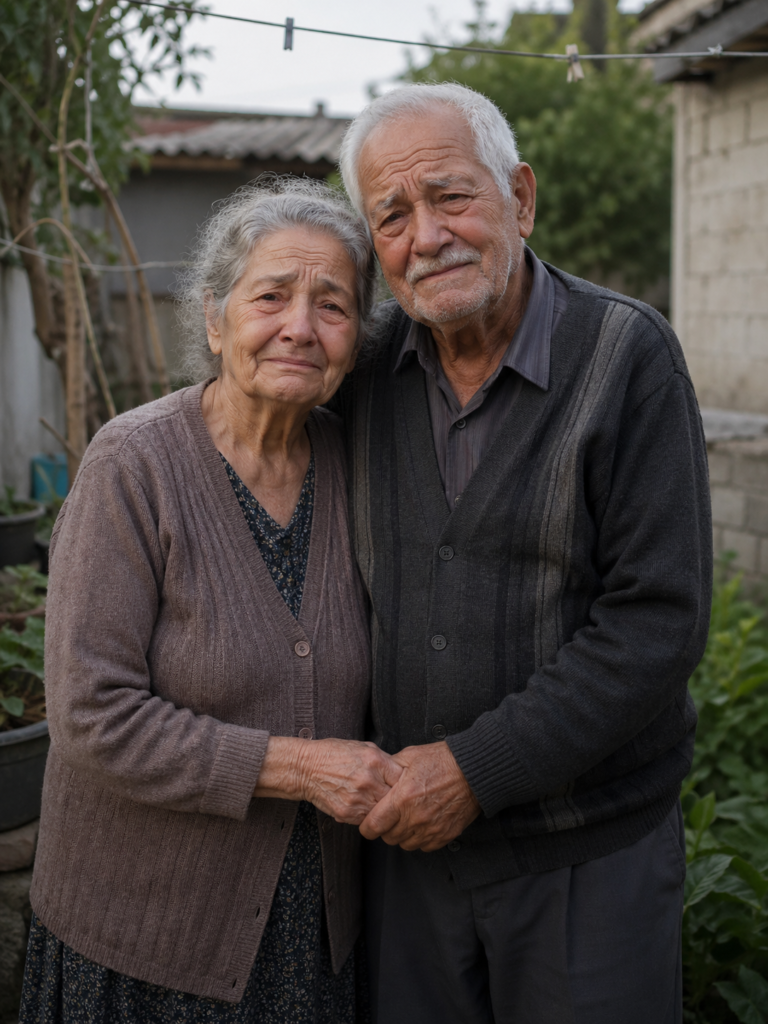
The morning their children left, Harold and Mae stood in the backyard holding hands, pretending to smile for a family photo that no one wanted to take.
Their son had said it gently, as if soft words could make it less painful.
“Dad, Mom… we just think it’s better this way.”
Better.
That was the word he used while loading the last suitcase into the car.
Better that the old house be sold. Better that they “stop depending on everyone.” Better that their children move forward without the burden of weekend visits, phone calls, doctor appointments, and memories.
Mae did not cry in front of them.
She only held Harold’s hand tighter.
Their daughter kissed her cheek quickly, barely looking her in the eyes.
“We’ll call once things settle down,” she said.
But Mae knew that voice.
It was the voice people used when they were already leaving.
By sunset, the garden was quiet. The chairs under the old lemon tree were empty. The small table where Mae used to serve tea for her grandchildren still had four cups on it.
Harold looked at the gate for a long time.
Then he whispered, “Maybe tomorrow.”
Mae smiled even though her heart felt heavy.
“Yes,” she said softly. “Maybe tomorrow.”
But tomorrow came.
And no one called.
For the first week, Mae kept cooking too much food.
She made soup in the big pot because her son used to love it. She baked sweet rolls because her youngest granddaughter always asked for the corner piece. She folded napkins and placed them on the table before realizing there were only two people left to sit there.
Harold noticed, but he never corrected her.
Instead, he washed every extra dish quietly, dried each one with slow hands, and placed them back in the cabinet as if the family might still return for dinner.
On Sunday morning, he dressed in his best gray sweater.
Mae saw him combing his white hair in the mirror.
“Where are you going?” she asked.
“To the gate,” he said. “They might come by.”
She wanted to tell him not to hope too much. She wanted to protect him from the disappointment she could already see waiting at the end of the driveway.
But how could she tell a father not to wait for his children?
So she helped him button his sweater and walked beside him into the garden.
They stood there together, hand in hand, just like they had on the day everyone left.
A neighbor passed and waved gently.
“You two all right?” Mrs. Bell asked from across the fence.
Mae smiled.
“We’re fine,” she said.
But Mrs. Bell’s eyes softened, because everyone in the neighborhood knew.
They knew Harold had spent forty years working at the paper mill, saving every spare dollar for his children’s education. They knew Mae had taken care of the grandchildren after school, missed her own doctor appointments, and never asked for payment, thanks, or rest.
They knew that when Harold fell on the porch last winter, his children argued over who was “too busy” to take him to therapy.
And they knew that two weeks ago, a moving truck came—not to take Harold and Mae somewhere safer, but to remove furniture their children claimed “belonged to the family.”
That afternoon, Mae found Harold sitting in the garden with an old photo album on his lap.
His hands trembled as he turned the pages.
There was their son at age seven, missing two front teeth. Their daughter in a yellow dress, holding Mae’s hand on the first day of school. Birthday cakes. Christmas mornings. Little shoes by the back door. Drawings taped to the fridge.
Harold touched one photograph with his thumb.
“I don’t understand,” he said quietly. “We gave them everything we had.”
Mae sat beside him.
“Maybe we gave too much,” she whispered.
Before Harold could answer, a car stopped in front of the house.
It was not their son’s car.
It was not their daughter’s.
A young woman stepped out holding a brown envelope against her chest.
She looked nervous, almost afraid.
“Are you Mr. and Mrs. Whitaker?” she asked.
Mae stood slowly.
“Yes.”
The young woman looked at both of them, then at the old house behind them.
“My name is Clara,” she said. “I worked for your son’s attorney.”
Harold’s face changed.
“Our son’s attorney?”
Clara swallowed.
“I’m not supposed to be here,” she said. “But I couldn’t stay quiet after what I saw.”
Then she handed Mae the envelope.
And when Mae opened it, the first line inside made her knees almost give way.
It was a copy of a document.
At the top were the words: Property Transfer Authorization.
Mae stared at it, confused at first.
Then she saw their names.
Harold Whitaker.
Mae Whitaker.
Below that was the address of their home.
The old house. The garden. The lemon tree. The porch Harold had repaired every summer. The kitchen where Mae had fed three generations.
Their life was written there in cold black letters.
Mae’s hand began to shake.
Harold leaned closer.
“What is it?” he asked.
Clara stepped forward quickly, concern filling her face.
“Please sit down,” she said. “There’s more.”
Mae lowered herself onto the garden chair. Harold stayed standing for a moment, as if his body had forgotten how to move.
Clara looked toward the street, then back at them.
“I worked as an assistant in the office handling your son’s paperwork,” she said. “I saw documents that didn’t feel right. I asked questions, and I was told to stay out of it.”
Harold’s voice was low.
“What documents?”
Clara opened the envelope and pulled out several pages.
“There was a plan to transfer ownership of this house,” she said carefully. “Your children were trying to prove that you were no longer able to manage your own affairs.”
Mae blinked.
“That’s not true.”
“I know,” Clara said softly. “That’s why I came.”
Harold looked at the papers, but his eyes were not angry yet. They were wounded.
“Our own children?”
Clara did not answer immediately.
That silence was answer enough.
Mae pressed one hand to her chest.
The world around her seemed to slow. She could hear the leaves moving in the garden, the soft creak of the clothesline, the distant sound of a dog barking. Everything normal continued around them, even though something inside her had cracked.
“They said they wanted to help,” Mae whispered. “They said selling the house would make things easier.”
Clara nodded sadly.
“But the paperwork showed something else. Once the house was transferred, they planned to sell it quickly. The money would not have gone into an account for your care. It was being divided between them.”
Harold turned away.
For a moment, he said nothing.
Then he walked slowly toward the lemon tree and placed one hand against the trunk.
He had planted that tree the year their son was born.
Mae remembered him digging the hole in the backyard, young and strong, his shirt damp with sweat, laughing because baby Daniel had cried every time the shovel hit a stone.
“This tree will grow with him,” Harold had said.
And it had.
It had shaded birthday parties, family lunches, and summer afternoons when their children played barefoot in the grass.
Now Harold stood under it like a man who had lost more than a house.
Mae looked at Clara.
“Why would you risk coming here?”
Clara’s eyes filled with tears.
“My grandmother raised me,” she said. “When she got older, some relatives tried to take advantage of her. No one believed her until it was almost too late.”
She looked down at the envelope.
“When I saw your file, I heard her voice in my head. I couldn’t ignore it.”
Mae reached for Clara’s hand.
“Thank you.”
Clara shook her head.
“There’s something else. The documents are not complete. They still need your signatures. But your son told the attorney he could get them.”
Harold turned back.
“How?”
Clara hesitated.
“He said you trusted him enough to sign anything if he told you it was for medical planning.”
Mae closed her eyes.
She remembered Daniel visiting the week before.
He had been unusually kind. He had brought groceries. He had sat at the kitchen table and spoken about “future security” and “making things simple.” He had placed a folder beside Mae’s tea and said they would talk about it later.
She had almost felt hopeful that day.
She had almost believed her son was coming back to her.
Now she understood.
Harold came back to the table.
His voice was steady, but his hands trembled.
“What should we do?”
Clara handed them a small card.
“This attorney is retired now, but he helped my grandmother. He’s honest. Call him. Do not sign anything. Do not let anyone pressure you.”
Mae looked at the card.
Samuel Reed, Elder Law Attorney.
Harold nodded slowly.
“Thank you, Clara.”
Before leaving, Clara looked at both of them with a kind of guilt that did not belong to her.
“I’m sorry,” she said.
Mae answered softly, “You are not the one who should be sorry.”
That night, the house felt different.
The silence was no longer only loneliness.
Now it carried the weight of truth.
Mae sat at the kitchen table with the envelope in front of her. Harold made tea, though neither of them drank much.
For hours, they talked about things they had avoided for years.
They spoke about Daniel’s impatience, about their daughter Elise’s coldness, about every time they had made excuses for their children.
“They’re busy.”
“They have families.”
“They’re under stress.”
“They don’t mean it.”
But now the excuses sounded thin.
Mae touched the rim of her cup.
“Do you think we failed them?” she asked.
Harold looked at her sharply.
“No.”
His answer came faster than she expected.
“No, Mae. We were not perfect. No parents are. But we loved them. We fed them. We protected them. We gave them more chances than they ever gave us.”
Mae’s eyes filled.
“I still love them.”
Harold sat beside her and took her hand.
“So do I,” he said. “But loving them doesn’t mean letting them take everything from us.”
The next morning, Harold called Samuel Reed.
The old attorney listened quietly while Mae and Harold explained. He asked clear questions. He requested copies of the documents. Then he said something that made Mae breathe for the first time in days.
“You still own your home. They cannot take it without proper legal process and your informed consent. Do not sign anything. I want to meet with both of you.”
Two days later, Samuel sat in their living room with a leather folder on his lap.
He was in his seventies, with silver glasses and a calm voice. He spoke to Harold and Mae like adults, not like fragile burdens.
That alone nearly made Mae cry.
After reviewing the papers, Samuel’s expression hardened.
“This was not just poor judgment,” he said. “This was planned.”
Harold looked down.
Mae asked, “Can we stop it?”
“Yes,” Samuel said. “But you need to act carefully. First, we revoke any old permissions or informal documents your children may claim to have. Second, we create a proper estate and care plan that protects you. Third, if they continue pressuring you, we document everything.”
Mae nodded.
“Will they know?”
Samuel looked at her gently.
“They will know when they try to move forward and realize they cannot.”
Harold gave a bitter little laugh.
“That will be soon.”
He was right.
Three days later, Daniel called.
Mae’s heart jumped when she saw his name. Even after everything, some small part of her still wanted to believe he was calling to say he missed them.
She answered with trembling fingers.
“Hello, Daniel.”
“Mom,” he said warmly. Too warmly. “How are you and Dad?”
Mae looked at Harold. He sat across from her, listening.
“We’re all right.”
“Good. Good. I was thinking I should come by tomorrow. Remember those papers we talked about? We really need to get them signed.”
Mae closed her eyes.
There it was.
Not “I miss you.”
Not “I’m sorry.”
Papers.
“What papers?” she asked, though she already knew.
Daniel sighed.
“Mom, don’t start. We discussed this. It’s just for your protection.”
Harold held out his hand for the phone.
Mae handed it to him.
“Daniel,” Harold said.
There was a pause.
“Dad. Good. Maybe you can explain it to Mom.”
Harold’s voice stayed calm.
“We’ve spoken to an attorney.”
Silence.
A long silence.
Then Daniel’s tone changed.
“What attorney?”
“One who understands these things.”
“Dad, that was unnecessary. You’re making this difficult.”
“No,” Harold said quietly. “You made this difficult when you tried to take our home.”
Daniel’s breath sharpened.
“That’s not what happened.”
“Then come explain it,” Harold said. “Bring your sister.”
Daniel hung up.
Mae stared at the phone.
Harold placed it on the table as if it weighed more than stone.
“They’ll come,” he said.
And they did.
The next afternoon, Daniel arrived in a polished black car with Elise beside him. Neither brought the grandchildren.
Mae noticed that first.
A grandmother notices absence before anything else.
Daniel entered without knocking, just like he had when he was a boy. But he was not a boy anymore. He was a man in an expensive coat, carrying irritation in his jaw.
Elise looked around the house as if checking what was still worth taking.
“Mom,” she said stiffly.
Mae stood near the kitchen doorway. Harold sat at the table. Samuel Reed was beside him.
Daniel stopped when he saw the attorney.
His face changed.
“Who is this?”
Samuel stood.
“Samuel Reed. I represent your parents.”
Elise laughed nervously.
“Represent them? Against us?”
“No one said against,” Samuel replied. “Unless that is how you see it.”
Daniel pointed at the papers on the table.
“This is ridiculous. We were trying to help.”
Harold looked at his son.
“Help who?”
Daniel’s face reddened.
“Dad, you’re not being fair.”
Mae finally spoke.
“Fair?”
Her voice was soft, but everyone turned.
“Was it fair when your father sat by the gate waiting for you to visit? Was it fair when I cooked your favorite soup because I still hoped you might walk in? Was it fair when you let us believe we were loved while you planned to sell the roof over our heads?”
Elise crossed her arms.
“Mom, don’t be dramatic.”
Mae flinched, but she did not step back.
For years, those words had silenced her.
Don’t be dramatic.
Don’t make us feel guilty.
Don’t make this emotional.
But this was emotional.
It was her life.
It was her home.
It was the place where she had raised them.
“I am your mother,” Mae said. “I have earned the right to feel pain.”
The room went quiet.
Daniel looked away first.
Samuel opened the folder.
“Your parents will not sign the property transfer. Any future attempts to pressure them will be documented. Their estate plan has been updated. Their home remains legally protected.”
Elise’s expression hardened.
“So that’s it? We get nothing?”
Harold looked at her with deep sadness.
“You came here worried about what you get?”
Elise’s mouth opened, then closed.
Daniel rubbed his forehead.
“You don’t understand. We have bills. Mortgages. College costs. You’re sitting on a house you don’t even need.”
Mae’s eyes filled again, but this time her tears did not weaken her.
“This house is not a pile of money,” she said. “It is where your father carried you to bed when you fell asleep on the sofa. It is where I stayed up all night when you had fevers. It is where your children learned to walk.”
Daniel looked uncomfortable.
Elise looked annoyed.
And in that moment, Mae understood something painful.
Memories do not have the same value to everyone.
To her, the house was love.
To them, it had become an asset.
Harold stood slowly.
“I will say this once,” he said. “We still love you. But you will not control us. You will not use our age as a weapon against us. And you will not take this house while we are alive.”
Daniel’s voice dropped.
“You’ll regret this.”
Samuel stepped forward.
“I would be careful with that tone.”
Daniel looked at him, then at his parents.
For one second, Mae thought she saw shame in his eyes.
But it disappeared quickly.
He turned and walked out.
Elise followed.
The door closed harder than necessary.
Mae stood still until the sound of the car faded.
Then her knees weakened.
Harold reached her just in time.
“I’m here,” he whispered.
“I know,” she said through tears. “I know.”
After that day, the house changed again.
Not because the sadness disappeared.
It did not.
There were mornings when Mae still woke hoping for a call. There were evenings when Harold still looked toward the gate. Love does not vanish because someone hurts you.
But something else grew in the quiet spaces.
Strength.
Samuel helped them finalize their protections. Mrs. Bell started bringing over fresh bread every Friday. Clara visited once a month and brought flowers for the garden. Slowly, Harold and Mae stopped waiting at the gate every Sunday.
Instead, Harold built a small bench beneath the lemon tree.
Mae painted it blue.
“Too bright?” she asked.
Harold smiled.
“No,” he said. “It looks alive.”
One afternoon, Clara came by with her little boy, Noah. He was six, shy, and missing one front tooth.
When he saw the lemon tree, his eyes widened.
“Can I pick one?”
Harold laughed for the first time in weeks.
“Only if you help me carry the basket.”
Noah followed him through the garden, asking questions about worms, birds, and why old trees had rough skin.
Mae watched from the porch, one hand over her heart.
Clara sat beside her.
“I hope this is okay,” Clara said. “He doesn’t have grandparents nearby.”
Mae looked at the boy laughing beside Harold.
“It’s more than okay.”
From then on, Clara and Noah became part of their Sundays.
Then Mrs. Bell’s niece came with her children. Then a retired neighbor named George started stopping by with tomatoes. What began as small visits turned into shared meals under the lemon tree.
Mae cooked again.
But this time, she did not cook for people who made her feel forgotten.
She cooked for people who came, stayed, helped wash dishes, and asked Harold to tell stories about the paper mill.
Months passed.
Daniel did not call.
Elise sent one message asking if they had “calmed down yet.” Mae did not respond. She cried after reading it, then deleted it.
Harold found her in the kitchen.
“You all right?”
“No,” she said honestly. “But I will be.”
He kissed her forehead.
“Yes,” he said. “You will.”
Then, in late autumn, a letter arrived.
It was from their granddaughter, Lily.
Mae recognized the handwriting, though it had grown neater since the last birthday card.
Dear Grandma and Grandpa,
I don’t know if I’m allowed to write to you, but I found your address in Mom’s old book. I miss you. Dad says things are complicated. Mom says you chose money over family. But I remember your garden. I remember Grandpa teaching me how to plant seeds. I remember Grandma making sweet rolls.
Did you really not want to see us anymore?
Mae read the final line and broke down.
Harold took the letter and sat beside her.
“No,” he whispered. “No, sweetheart.”
They wrote back that same day.
They did not speak badly of Daniel or Elise. They did not place adult pain on a child’s shoulders.
They wrote simply:
We have always wanted to see you. We love you very much. Our door is open to you.
Two weeks later, Lily came.
She was seventeen now, taller than Mae, with nervous hands and tearful eyes. Clara drove her because Lily had arranged the visit quietly.
The moment she saw Mae, she ran into her arms.
“I thought you didn’t want us,” Lily cried.
Mae held her tightly.
“Never,” she whispered. “Never.”
Harold stood behind them, wiping his eyes.
Lily stayed for dinner. She asked questions. Slowly, gently, Harold and Mae told her enough of the truth for her to understand without making her carry all of it.
Lily listened in silence.
Then she said, “They told us you were becoming difficult.”
Mae looked down.
Lily reached across the table and took her hand.
“You were never difficult to me.”
That night, after Lily left, Mae stood in the garden beneath the lemon tree.
The air was cool. The sky was soft and gray. Harold came out and placed a shawl around her shoulders.
“She came back,” Mae said.
Harold nodded.
“One came back.”
It was not everything.
But it was something.
And sometimes something is where healing begins.
Over the next year, Lily visited often. She brought school news, books, and sometimes quiet apologies for things she had not done. She helped Harold prune the lemon tree. She learned Mae’s sweet roll recipe. She took photos—not the forced kind, not the kind taken to prove a perfect family existed, but real ones.
One photo became Mae’s favorite.
It showed Harold and Mae standing in the garden, holding hands.
Their faces were lined. Their eyes still carried old pain. But there was something new there too.
Peace.
Not because their children had suddenly become who they wished they were.
Not because every wound had closed.
But because Harold and Mae had learned the hardest lesson of their lives:
Being abandoned by the people you raised does not mean you are worthless.
It means they forgot the value of what they were given.
And one day, years later, when Harold sat beneath the lemon tree with Mae beside him and Lily laughing in the garden, he squeezed his wife’s hand.
“Remember when I kept saying maybe tomorrow?” he asked.
Mae smiled gently.
“Yes.”
Harold looked at the garden full of people who had chosen to stay.
“I think tomorrow finally came.”
Mae leaned her head on his shoulder.
And this time, when she smiled, she did not have to pretend.
- We Went on a Cruise. You Take Care of Grandpa.” Then Grandma’s Letter Fell From Her Bible, and the Whole Kitchen Went SilentPart 1 “We went on a cruise. You take care of Grandpa.” My mother had written it like it was nothing. The note sat on the kitchen counter in her …
- [PART 2] We Went on a Cruise. You Take Care of Grandpa….We Went on a Cruise. You Take Care of Grandpa.” Then Grandma’s Letter Fell From Her Bible, and the Whole Kitchen Went Silent Part 2 That afternoon, as snow melted …
- [FULL STORY] The old man sat in the living room with one hand pressed gently against his face, trying not to let his son see how badly his heart was shaking.The old man sat in the living room with one hand pressed gently against his face, trying not to let his son see how badly his heart was shaking. His …
- [FULL STORY] The morning their children left, Harold and Mae stood in the backyard holding hands, pretending to smile for a family photo that no one wanted to take.The morning their children left, Harold and Mae stood in the backyard holding hands, pretending to smile for a family photo that no one wanted to take. Their son had …
- [FULL STORY] The nurses were running so fast that the wheels of the newborn crib rattled against the hospital floor.My baby was only minutes old. Wrapped in a white blanket, wearing a tiny blue cap, he looked too small for the panic around him. Two nurses pushed the clear …