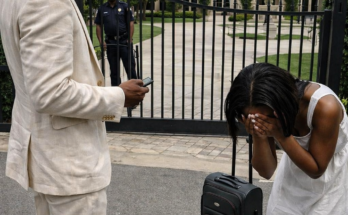
My husband and I divorced after thirty-six years of marriage.
For two years, I believed I had walked away from a man who had betrayed me, lied to me, and quietly drained the life we had built together.
Then, at his funeral, his father leaned close to me with red eyes and a shaking voice and said something that made the floor feel like it disappeared beneath me.
“You still don’t know what he did for you, do you?”
Those words followed me home.
They followed me into my empty kitchen.
They followed me into the bedroom I had once shared with Troy.
And by the time I finally learned the truth, I realized I had spent the last years of his life misunderstanding the man I had loved since childhood.
Troy and I had known each other since we were five years old.
Our families lived next door to each other on a quiet street lined with maple trees and old fences that never seemed to stay straight. His father fixed cars in the garage. My mother baked on Sundays. Our backyards touched, and as children, we never really knew where his home ended and mine began.
Troy was the boy who taught me how to ride a bike.
He was the boy who sat beside me on the school bus.
He was the boy who walked me home in the rain when we were thirteen and gave me his jacket even though he was shivering by the time we reached my front porch.
Everyone said we were meant to end up together.
At twenty, we got married in a small church with a simple reception in the community hall. We did not have much money, but we had faith in each other. Troy wore a suit that was slightly too big at the shoulders. I wore my mother’s old wedding veil. We danced under paper decorations while our families clapped and cried.
For most of our marriage, life was ordinary in the best way.
We worked hard. We paid bills. We raised two children—a daughter first, then a son. We bought a small house and slowly filled it with school papers, birthday balloons, broken toys, grocery lists, family photos, and all the little things that make a life feel full.
Troy was not a perfect man, but I never expected perfect.
He forgot anniversaries sometimes. He left tools on the kitchen counter. He could be stubborn when he thought he was right. But he was steady. He was there. He came home every night smelling like motor oil, cold air, and coffee from the gas station.
For thirty-five years, I believed I knew him better than anyone.
Then the money started disappearing.
At first, I thought I had made a mistake.
Our son had sent me some money to help cover a repair on the house. I went online to move it into savings, and the balance in our joint account looked wrong.
Not a little wrong.
Thousands of dollars were missing.
I stared at the screen, refreshing it twice, as if the number might fix itself. I pulled up the transaction history, thinking maybe a bill had gone through early or a check had finally cleared.
But the withdrawals were strange.
Some were large.
Some were smaller.
All of them had happened quietly over several months.
When Troy came home that evening, I was sitting at the kitchen table with my laptop open and my hands folded so tightly my fingers hurt.
“Troy,” I said, trying to keep my voice calm. “Do you know why there’s so much money missing from our account?”
He did not look surprised.
That was the first thing I noticed.
He took off his jacket, hung it on the back of a chair, and said, “It’s nothing. Just bills.”
“What bills?”
“House stuff.”
“What house stuff?”
He sighed like I was irritating him.
“Repairs. Things I had to handle.”
I wanted to believe him. After three and a half decades of marriage, believing him was almost automatic. So I let it go that night.
But the money kept disappearing.
A few days later, I asked again.
This time he said, “I moved some money around. It’ll come back.”
But it never came back.
Then he said it was for a friend.
Then he said it was for something private.
Then he told me I was worrying too much.
Every answer was different.
Every answer felt thinner than the one before it.
I began checking the account every morning.
It became a habit I hated. Coffee, bank account, fear.
Then one afternoon, I was looking for a battery for the television remote. Troy always kept spare batteries in the small drawer of his desk in the den. I opened the drawer and moved aside a stack of papers.
That was when I saw the receipts.
They were folded together and tucked beneath an old envelope.
Hotel receipts.
Same hotel.
Same city.
Same room number.
My heart dropped so quickly I had to sit down.
I read them once.
Then again.
Then a third time, hoping I had misunderstood what I was seeing.
The dates matched days when Troy had told me he was working late, helping a friend, or running errands out of town.
I felt cold all over.
For several minutes, I just sat there in his chair, surrounded by the smell of his aftershave and old paper, holding the receipts like they belonged to someone else’s life.
That evening, before he came home, I called the hotel.
My voice sounded strange even to me.
I told the person at the front desk that I was calling on behalf of my husband and wanted to confirm the room he usually used.
The man on the phone did not hesitate.
“Of course,” he said politely. “Mr. Troy is a regular guest. That room is usually kept available for him.”
A regular guest.
The words burned.
When Troy came home, I placed the receipts on the kitchen table.
He looked at them.
Then he looked at me.
He did not ask where I had found them.
He did not seem confused.
He did not even try to deny it.
“Explain this,” I said.
He lowered himself into the chair across from me and rubbed his hands over his face.
“Troy,” I said again, my voice breaking. “Explain it.”
“I can’t,” he said.
“You can’t?”
He shook his head.
“You mean you won’t.”
He looked at me then, and there was something in his eyes I could not understand. It was not guilt exactly. It was pain. But at that moment, I was too hurt to see anything clearly.
“Is there someone else?” I asked.
He closed his eyes.
“Answer me.”
“I can’t tell you,” he said quietly.
That was the sentence that ended my marriage.
Not because it confirmed everything.
Because it confirmed he had chosen secrecy over me.
Thirty-six years together, and he would not give me the truth.
The next weeks were terrible.
We lived in the same house but barely spoke. I slept in the guest room. He left early and came home late. Sometimes I caught him staring at me like he wanted to say something, but he never did.
Our children were devastated when we told them.
Our daughter cried and asked if we had tried counseling.
Our son got angry and asked Troy what he had done.
Troy only said, “This is between your mother and me.”
That made me feel even more alone.
People in town whispered. Some took my side. Some said maybe there was more to the story. But no one knew what I knew.
The missing money.
The hotel.
The room.
His refusal to explain.
I filed for divorce with shaking hands.
On the day we signed the papers, Troy looked older than I had ever seen him. His hair had gone mostly gray at the temples. His eyes looked tired. As we walked out of the office, he stopped beside me.
“I never wanted to hurt you,” he said.
I laughed, but there was no humor in it.
“Then why did you?”
His mouth opened, but no words came out.
That was the last private conversation we had as husband and wife.
After the divorce, I tried to rebuild my life.
People imagine freedom after leaving a painful marriage, but at first, it felt like silence. Too much silence. The house was too quiet. The bed was too large. The evenings stretched on forever.
Sometimes I hated him.
Sometimes I missed him.
Sometimes I hated myself for missing him.
I told myself I had done the right thing.
A woman cannot live inside a mystery and call it love.
For two years, Troy and I barely spoke. We were polite at family gatherings. We stood on opposite sides of rooms during holidays. He sent birthday cards. I sent short thank-you messages.
He never remarried.
I never dated anyone seriously.
Then one morning, our daughter called me.
Her voice was small.
“Mom,” she said, “Dad is gone.”
At first, I did not understand.
“What do you mean, gone?”
“He passed away last night.”
The cup in my hand slipped into the sink and shattered.
Troy had died suddenly in his sleep.
No warning.
No goodbye.
No final answer.
The funeral was held three days later at the same church where we had gotten married.
That detail nearly broke me.
I sat in the second row beside our children while people came and went, offering hugs, soft words, and memories of the man I had once known better than anyone.
There were photos near the front.
Troy as a boy with dirt on his face.
Troy holding our newborn daughter.
Troy teaching our son how to fish.
Troy standing beside me on our twenty-fifth anniversary, his arm around my waist, both of us smiling like we had forever ahead of us.
I looked at that photo for too long.
During the service, I cried quietly.
I told myself I was crying for the past, not for the man he had become.
Afterward, people gathered in the church hall. There was coffee, sandwiches, soft conversation, and the strange heaviness that follows a goodbye.
That was when Troy’s father found me.
His name was Henry. He was eighty-one years old, a proud, stubborn man who had always treated me like a daughter. But that day, he looked fragile. His shirt collar was crooked. His eyes were red. His hands trembled around a paper cup.
He had clearly been drinking before the service, maybe to steady his grief, maybe to escape it for a little while.
He came toward me slowly.
I stood up.
“Henry,” I said gently. “Are you okay?”
He stared at me with an expression I had never seen before.
Anger.
Grief.
And something that looked almost like pity.
Then he leaned close and said, his voice rough and shaking, “You still don’t know what he did for you, do you?”
I froze.
“What?”
He pointed one trembling finger at me.
“You left him thinking the worst,” he said. “And he let you.”
My chest tightened.
“What are you talking about?”
Henry’s face crumpled.
“He made me promise not to tell you. But he’s gone now. I can’t carry it anymore.”
My daughter walked over, alarmed.
“Grandpa, what are you saying?”
Henry looked at her, then at my son, then back at me.
“He didn’t spend that money on another woman,” he said.
The room seemed to go quiet around us.
I could hear the hum of the refrigerator in the corner. Someone dropped a spoon. My own heartbeat filled my ears.
“Then what was it?” I whispered.
Henry closed his eyes.
“Your sister.”
I stepped back.
“My sister?”
My sister, Elaine, was three years younger than me. We had not been close for years. She had always been proud, private, and difficult to reach emotionally. She lived in another city and rarely visited. We spoke on birthdays, holidays, and not much more.
“What does Elaine have to do with Troy?” I asked.
Henry lowered his voice.
“She was sick.”
I shook my head.
“No. I would have known.”
“She didn’t want you to know.”
My daughter covered her mouth.
Henry continued, each word heavy.
“She found out before the divorce. It was serious. She had bills she couldn’t pay. Treatments. Travel. A private recovery place near the hospital.”
My stomach twisted.
“The hotel,” I whispered.
Henry nodded.
“The hotel was near the clinic. Troy was driving her there. Helping her check in. Paying what she couldn’t pay. She begged him not to tell you.”
I felt the room tilt.
“No,” I said. “No, that doesn’t make sense. Why would she ask him and not me?”
“Because she was ashamed,” Henry said. “Because she had pushed you away for years. Because she didn’t want to come back into your life only because she needed help.”
I pressed a hand against my chest.
“Troy should have told me.”
“He wanted to.”
“Then why didn’t he?”
Henry’s eyes filled again.
“Because Elaine made him promise. She told him if he told you, she would disappear and refuse care. Troy believed keeping her alive mattered more than keeping himself innocent.”
I could not breathe.
All those nights.
All those receipts.
All that missing money.
All that silence.
“He let me divorce him,” I said, barely able to hear my own voice.
Henry nodded slowly.
“He thought if you hated him, at least you wouldn’t have to carry the fear of losing your sister too.”
My son’s face had gone pale.
“Dad never told us,” he said.
“He wouldn’t,” Henry replied. “He said it wasn’t his story to tell.”
I sat down because my knees could no longer hold me.
Memories rushed back all at once.
Troy saying, “I can’t tell you.”
Troy looking at me with pain I had mistaken for guilt.
Troy standing outside the lawyer’s office saying, “I never wanted to hurt you.”
And me asking, “Then why did you?”
He had never answered.
Because the answer would have broken a promise.
Because the answer would have exposed my sister’s private struggle.
Because the answer would have changed everything.
I left the funeral hall before anyone could stop me.
My daughter followed me outside.
“Mom,” she said softly.
I stood beside the church steps, gripping the railing.
“Did you know?” I asked.
She shook her head quickly.
“No. None of us knew.”
I looked across the parking lot at the bare winter trees.
For two years, I had believed Troy had betrayed me.
For two years, I had protected myself with anger.
And now anger had nowhere to go.
Only grief remained.
A week after the funeral, Henry came to my house with a cardboard box.
He looked embarrassed standing on my porch.
“I should have told you better,” he said. “Not like that.”
I let him in.
We sat at the kitchen table where I had once placed the receipts in front of Troy.
Henry pushed the box toward me.
“Troy left this with me,” he said. “He said if anything ever happened to him, I should give it to you only if the truth came out.”
Inside were envelopes.
Receipts.
Medical bills.
Hotel statements.
Notes in Troy’s handwriting.
And a letter with my name on it.
My hands shook as I opened it.
The letter was dated three months before our divorce became final.
Troy’s handwriting was uneven, as if he had started and stopped many times.
It said:
Dear Claire,
If you are reading this, then I either failed to explain myself, or I am no longer here to try.
I know what you thought when you found the receipts. I saw it in your face. I wanted to tell you everything. I wanted to pull you into my arms and say, “It’s not what you think.”
But I made a promise.
Elaine came to me because she was scared. She said she could not face you. She said she had spent too many years being distant, jealous, and proud. She said she did not deserve your help.
I told her she was wrong.
She still refused.
So I helped her quietly.
The hotel was where she stayed during treatments. I paid because she had no one else. I drove her because she was too weak some days to go alone. I sat in waiting rooms. I brought soup. I called the nurses when she was frightened.
I should have told you.
I know that.
But every time I tried, I saw Elaine’s face and heard her begging me not to.
I made the wrong choice by keeping it from you.
But I did not do it because I stopped loving you.
I did it because I loved you, and because I hoped one day Elaine would be strong enough to come back to you herself.
If you hate me, I understand.
But please know this: there was never anyone else.
There was only a promise I did not know how to break.
I loved you when we were five.
I loved you when we were twenty.
I loved you when you signed the divorce papers.
And I love you still.
Troy
By the time I finished reading, I could not see the page through my tears.
Henry sat quietly across from me.
“Where is Elaine now?” I asked.
His face changed.
“She passed away eight months before Troy.”
The words struck me gently and terribly at the same time.
I had not known.
My own sister had died, and I had not known.
Henry explained that Elaine had used her middle name at the clinic. She had asked for no public announcement. She had left instructions that only Troy and Henry be contacted.
I wanted to be angry at her.
Part of me was.
But beneath the anger was an ache so deep I could hardly touch it.
All those years of distance.
All that pride.
All that silence.
And Troy had stood in the middle of it, carrying a secret too heavy for one person.
Over the next month, I went through everything in the box.
There were notes Troy had written after taking Elaine to appointments.
“Elaine ate half a sandwich today.”
“Doctor says numbers improved.”
“She asked about Claire but told me not to say anything.”
“She cried in the car today. Said she missed her sister.”
That one broke me.
I read it again and again.
She missed her sister.
And I had spent those months believing my husband was living a double life.
One afternoon, I found a small envelope at the bottom of the box.
Inside was a photo.
Elaine sat in a hospital garden wearing a soft scarf around her head. Troy sat beside her on a bench, holding two paper cups of coffee. They were not touching. There was nothing secret or romantic in the picture.
Only sadness.
Only kindness.
On the back, Elaine had written:
Tell Claire I was sorry.
I pressed the photo to my chest and cried in a way I had not cried in years.
Not pretty tears.
Not quiet tears.
The kind that come from realizing life cannot be rewritten.
I could not go back to the night I found the receipts.
I could not go back to the kitchen table and ask better questions.
I could not go back to Troy standing beside me after the divorce papers were signed.
I could not tell him I finally knew.
But I could tell the truth.
At first, I told only our children.
We sat together in my living room, the box open between us.
My daughter cried until her shoulders shook.
My son stood up, walked to the window, and stayed there for a long time.
“I was so angry at him,” he said.
“We all were,” I whispered.
My daughter picked up Troy’s letter and held it carefully.
“He protected Aunt Elaine,” she said.
“Yes.”
“And he protected you too.”
I looked at her.
She wiped her face.
“Maybe he thought losing your sister that way would break you.”
I closed my eyes.
Maybe he did.
Maybe he was wrong.
Maybe he was right.
Love does not always look wise from the outside.
Sometimes it looks like silence.
Sometimes it looks like sacrifice.
Sometimes it looks like the very thing that breaks a family apart.
A few weeks later, I visited Troy’s grave alone.
The grass was still new. The stone had only recently been placed. His name looked strange carved into granite.
Troy Michael Bennett.
Beloved son, father, and friend.
I stood there for a long time with my hands in my coat pockets.
“I know now,” I said softly.
The wind moved through the trees.
“I’m sorry I didn’t know sooner.”
I waited, as if the world might give me some kind of answer.
It did not.
But for the first time in years, I did not feel anger when I thought of him.
I felt sorrow.
And love.
Complicated, imperfect, painful love.
The kind that does not disappear just because papers are signed.
The kind that survives even misunderstanding.
The kind that leaves questions behind.
I placed Elaine’s photo beside his stone for a moment, then picked it back up before I left. It felt like both of them belonged with me now—not as perfect people, but as people who had been afraid, proud, loyal, and human.
Months passed.
I began writing down the truth, not for the world at first, but for myself.
I wrote about the boy next door.
The young husband in the oversized suit.
The father who taught our children to ride bikes.
The man who made a promise he should not have carried alone.
The woman who loved him, doubted him, left him, and learned too late that the story had another side.
People often say the truth sets you free.
But sometimes the truth arrives after the door has already closed.
Sometimes it does not free you from pain.
It only frees you from the wrong pain.
For two years, I lived with the pain of betrayal.
Now I live with the pain of misunderstanding.
I do not know which one is heavier.
But I do know this:
Troy was not perfect.
Neither was I.
Neither was Elaine.
We were all just people trying to survive what we did not know how to say.
If I could speak to Troy one more time, I would not ask why he kept the secret.
I already know.
I would simply say, “I wish you had trusted me with the truth.”
And then I would tell him what I should have told him before the end.
“I loved you too.”
Because I did.
Even when I was angry.
Even when I walked away.
Even when I thought he had ruined everything.
And now, every time I pass the old house where we grew up, I remember two children running between backyards, unaware of the long and painful life waiting ahead of them.
I remember the boy who gave me his jacket in the rain.
I remember the man who carried a secret until it cost him everything.
And I remember the words his father said at the funeral.
“You still don’t know what he did for you, do you?”
He was right.
I didn’t know.
But now I do.
And knowing changed everything.